A Tale of Two Referendum Efforts
Vol. III, No. 329 - Will Ohio Voters Get to Decide Two Big Public Issues?
Ohio voters already have a crowded fall ballot taking shape — contested statewide races, a U.S. Senate seat, and potentially two constitutional amendments that would fundamentally reshape life in the state. Whether those amendments actually land in front of voters depends entirely on what happens between now and July 1.
The Property Tax Fight Is Running Out of Road
The Committee to Abolish Property Taxes, also known as Ax Ohio Tax, needs at least 413,487 valid signatures from 44 of Ohio’s 88 counties by July 1 to make the November ballot . That number is set at 10% of all ballots cast in the 2022 governor’s race .
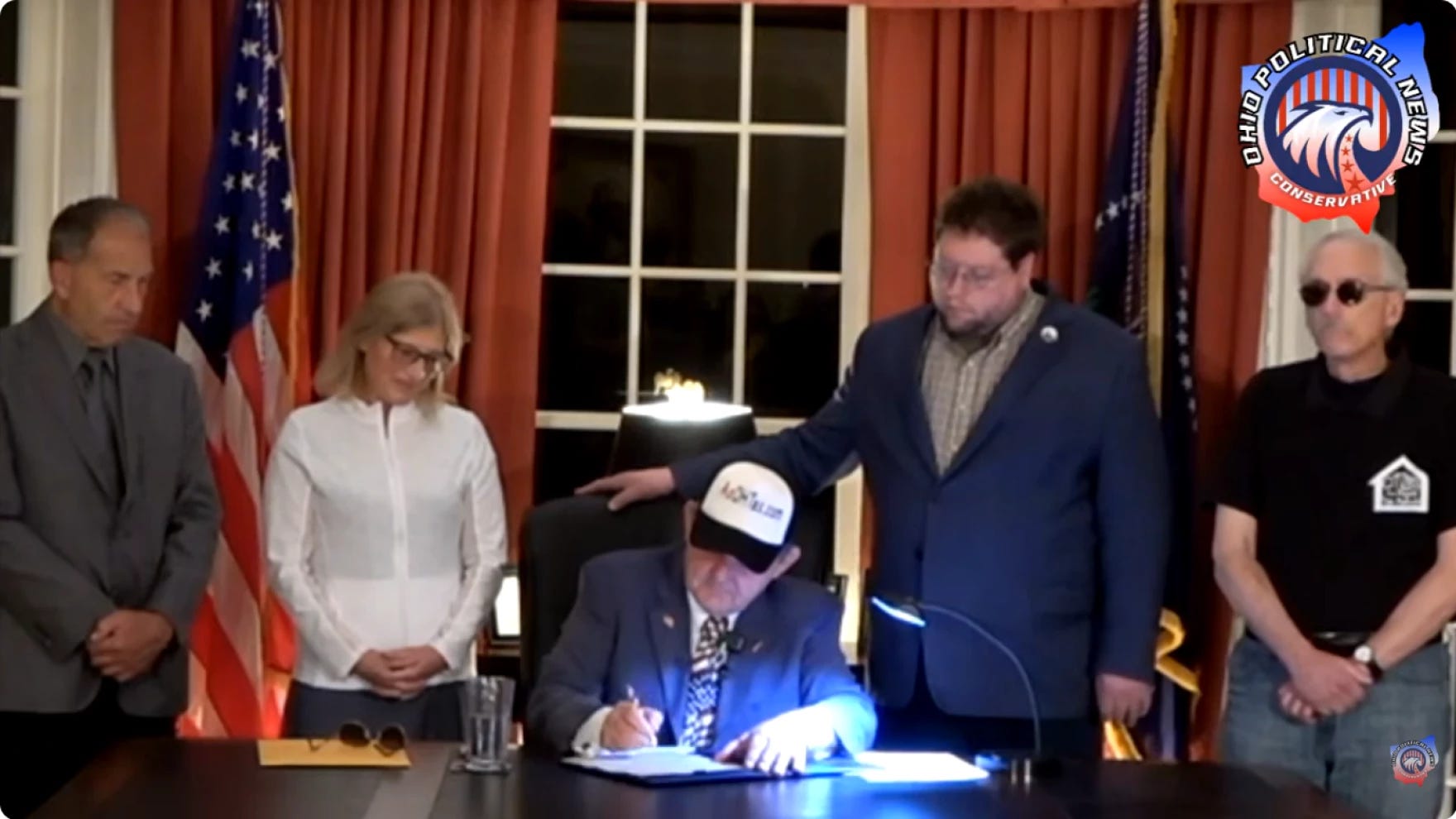
At a press event last week, covered by the Statehouse News Bureau and the Akron Beacon Journal, group leader Brian Massie disclosed that the effort has collected 305,000 signatures — but their own internal goal is 620,000, a threshold they acknowledge they won’t hit . Massie framed the decision ahead as a fork in the road: risk submitting what they have and hope enough signatures survive validation, or keep collecting and target the 2027 ballot .
That’s worth pausing on. Every successful citizen-initiated constitutional amendment in Ohio since 2018 — redistricting, reproductive rights, criminal justice reform — cleared 700,000 signatures before turning them in . And every single one used paid signature gatherers to get there . Ax Ohio Tax has largely relied on a network of “hosting stations,” asking supporters to seek out places to sign rather than putting canvassers where the people already are. For true believers, that works. For persuadable voters on the fence about something as consequential as eliminating property taxes statewide, it’s a heavy lift.
The political headwinds are also real. A coalition of more than 65 organizations — local governments, unions, schools, first responders — has already organized to fight the amendment if it makes the ballot . And even Republican State Senator Jerry Cirino, who represents the district where the announcement was held, called the proposal “irresponsible” for lacking any revenue replacement plan . The group’s own position is that replacing $24 billion in annual local revenue is the legislature’s problem to solve, not theirs .
That’s a bold posture. Whether Ohio voters see it as principled or reckless is a conversation we may never get to have.
The Data Center Fight Is Just Getting Started
The second potential amendment is moving in the opposite direction — early momentum, not late-stage doubt. Conserve Ohio, the organizing umbrella for a group of residents filing as Ohio Residents for Responsible Development, cleared an important legal hurdle in March when Attorney General Dave Yost certified their petition . That clears the way for signature gathering.
Their target: ban any data center in Ohio consuming more than 25 megawatts of electricity per month from being built . The same 413,487-signature threshold applies, from at least 44 counties, by July 1 — which is now just over two months away .
Co-author Austin Baurichter, an attorney from Georgetown in Brown County, has been refreshingly candid about the scale of what’s ahead . His group has county captains mapped, a statewide volunteer network ready to activate, and a strategy built around putting people at coffee shops, grocery stores, events — places where Ohioans already are . That forward approach — what you might call a go to them strategy — contrasts sharply with Ax Ohio Tax’s come to us model.
The data center industry, predictably, is pushing back. The Data Center Coalition argues the amendment would put Ohio at “a very competitive disadvantage” and would close the door on economic development in communities actively courting it . That’s a legitimate debate worth having — and it’s one that touches Miami County as much as anywhere, as communities across rural Ohio weigh what growth actually costs.
This Isn’t Abstract — Piqua Is Already in the Fight
Neither of these ballot efforts is a theoretical exercise for Miami County residents. Property taxes fund your school district, your fire department, your county services — the levies your neighbors voted for. Last year, residents saw skyrocking property taxes thanks largely to growing property values. Eliminating these taxes without a replacement plan doesn’t make government smaller; it just moves the crisis somewhere else.
But the data center fight hits even closer to home right now. Piqua is currently being eyed for data center development, and residents there are already pushing back. That’s not a coincidence — mid-sized Ohio cities with available land, power and water infrastructure, and lower land costs are exactly what the data center industry is targeting. The promise is economic development. The reality is facilities that consume massive amounts of electricity and water, generate relatively few permanent jobs, and fundamentally change the character of the communities that host them.
That local resistance is precisely why the Conserve Ohio signature effort matters here. Miami County residents who are already organizing against data center development in Piqua have a direct stake in whether this amendment makes the November ballot. If you feel strongly about it, finding a signing station isn’t just civic participation — it’s the most direct tool available before a developer breaks ground.
This is what it looks like when residents stay informed. If you find value in this work, share it with a neighbor, a colleague, or anyone who cares about this community. Paid subscriptions keep it going — $5 a month.
Civic Capacity runs on one thing: readers who believe local journalism matters. If you want to support this work without a subscription, you can now make a one-time contribution through Buy Me a Coffee — or in my case, Buy Me an Iced Tea. Click the button below. Every contribution goes directly into the work you read here every day.