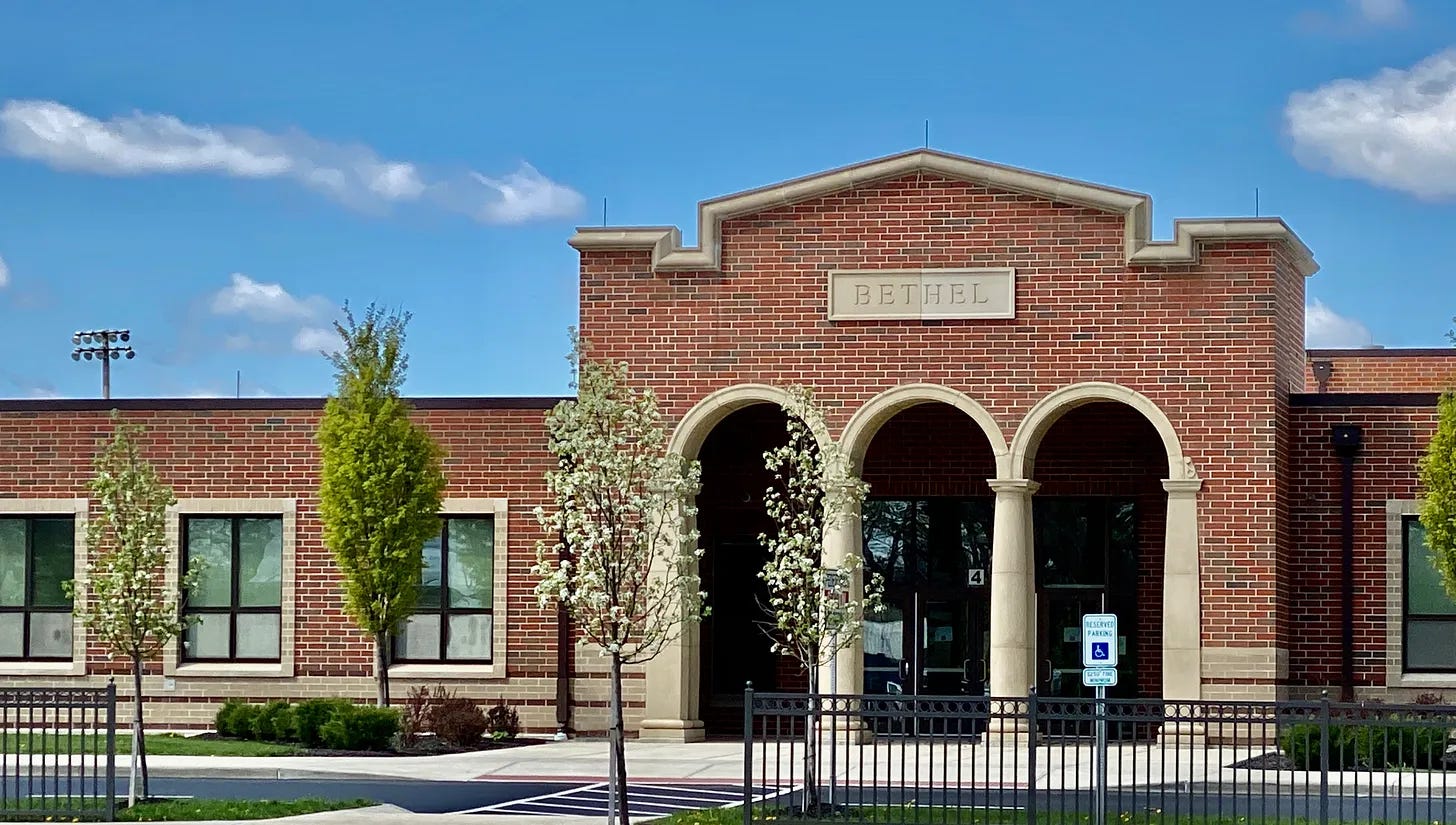
Bethel Local Schools Looks at a New Facility
Vol. III, No. 321 - Miami County's Fastest Growing School District is Looking at a New School -- Questions of What and When to Build Exist
This past week, the close-knit Bethel community came together for a town hall style meeting to look at new schools in the district. The Bethel Local School District — the fastest growing district in Miami County — is at a crossroads that will shape education for generations of students. At a recent public meeting, district leaders, the Ohio Facilities Construction Commission (OFCC), and architects from FMD Architects laid out two major facility plans and asked the community to weigh in. The stakes are high, the timeline is tight, and the decision is more nuanced than it may appear.
How This Opportunity Came About
This is not a bond issue. Let that sink in for a moment.
The district’s investment in the new elementary school — roughly $25–26 million — locked in an 80/20 funding split with the state back in 2020, meaning the state is obligated to fund 80% of remaining co-funded construction costs. A recent OFCC policy change moved Bethel toward the top of the state’s priority list for engagement, accelerating a timeline that once looked like a decade away. The result: the district can build a new high school or middle school with little to no additional burden on local taxpayers.
The board must select a master plan option before the end of April, with OFCC commission approval slated for July. This is a compressed decision window for something that will last 50 years.
The Two Main Options
The presentation outlined two co-funded configurations:
Option 1 — New High School (9–12) + Middle School renovation/addition of the existing HS: Total new construction of 137,756 SF at a project cost of approximately $62.9 million. The MS moves into renovated high school space, gaining larger athletic facilities, bigger science rooms, and an expanded dining area than a new MS build would provide.
Option 2 — New Middle School (5–8) + High School renovation/addition: Total new construction of 143,028 SF at approximately $65.7 million. Middle schoolers get a building designed specifically for their grade levels, with the high school staying on its current footprint.
The price difference is about 4% — roughly $2.8 million — in favor of building the new high school first. Both options are largely state-funded. The only significant locally required costs involve athletic space enhancements and a kitchen formula gap of roughly $23,000 in the new MS scenario.
The Timing Gamble
Perhaps the most consequential decision isn’t what to build — it’s when to complete the full plan.
Under Option A, the district builds the new building now and waits approximately five years for OFCC to return, reassess enrollment, and co-fund the second segment (renovation/addition). This keeps the state at the table for a future round of growth.
Under Option B, the district builds everything now using today’s cost projections for enrollment 10 years out and receives approximately $6 million back from OFCC to apply toward debt service. The downside: any future growth beyond what is planned today would require 100% local funding — essentially forcing the district back to voters.
Given that community members raised real-world growth pressures — farmland conversion, housing turnover, and Carriage Trails Phase 2 — the case for keeping OFCC engaged through Option A is worth serious board discussion.
What Residents Said
The public meeting surfaced thoughtful community input: separation of high school and elementary students for safety reasons, the need for a longer-range 25–50 year plan, interest in a future standalone auditorium, a second elementary near Carriage Trails 2.0, and additions like tennis and pickleball courts and a marching band practice field. Residents also pushed for clarity on whether the $6 million projected return will hold against inflation — a legitimate concern given cost overruns during the elementary school build.
The district confirmed clearly: no ballot measure is needed for the co-funded portion of this project. The local share was already covered through the elementary school investment.
The board will vote on which master plan to advance at its next meeting. This is one of those rare decisions where the financial structure actually favors the community — but only if the board chooses wisely and plans far enough ahead.
This is what it looks like when residents stay informed. If you find value in this work, share it with a neighbor, a colleague, or anyone who cares about this community. Paid subscriptions keep it going — $5 a month.
Civic Capacity runs on one thing: readers who believe local journalism matters. If you want to support this work without a subscription, you can now make a one-time contribution through Buy Me a Coffee — or in my case, Buy Me an Iced Tea. Click the button below. Every contribution goes directly into the work you read here every day.


