Celebrating National County Government Month
Vol. III, No. 304 - A Quick Look Into County Government
April is National County Government Month, and it’s a good time to pause and appreciate one of the most quietly essential — and most misunderstood — layers of government in American civic life.
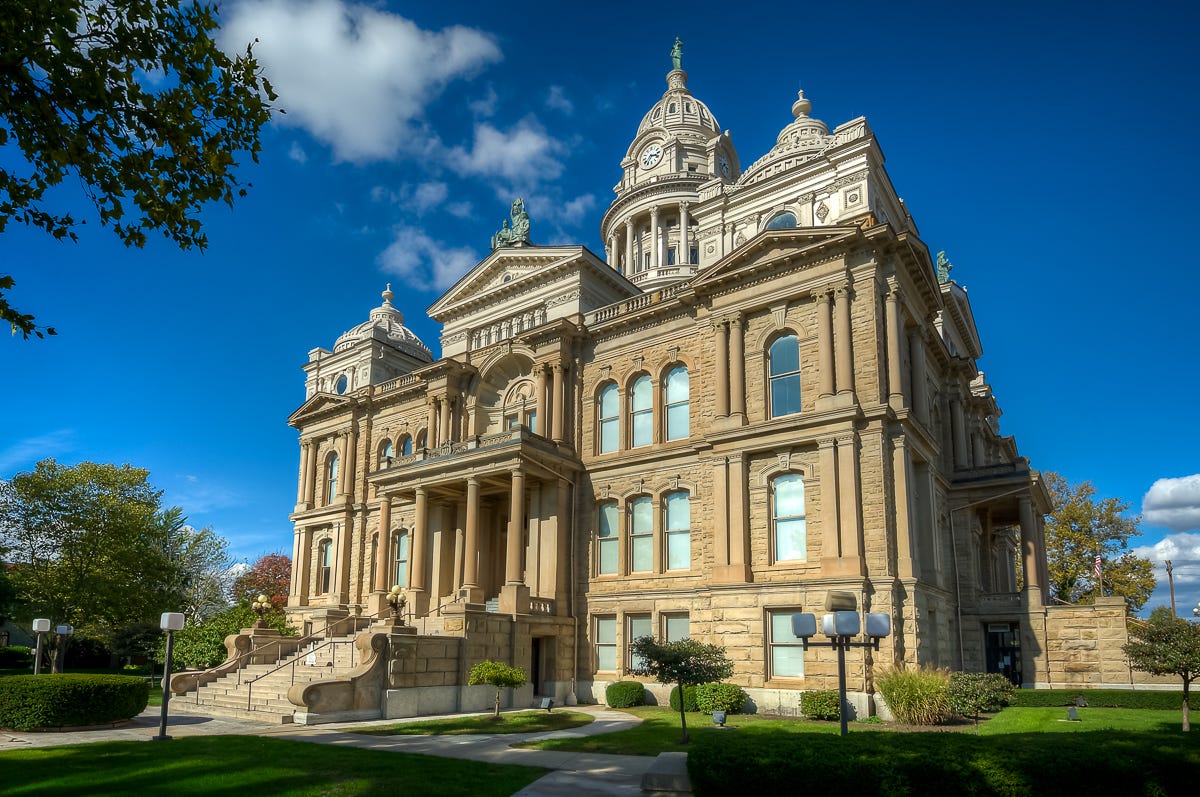
When most people think about local government, their minds jump to city hall or the school board. Around here, county government rarely gets top billing; unless you think about the Courthouse in downtown Troy. But even that is a misnomer, because county government is more than simply the justice system. Here in Ohio, and across much of the country, county government is doing some of the heaviest lifting in public service, often in ways residents never see or fully recognize.
What Counties Actually Do
Here’s the key to understanding county government: unlike cities, which exist to serve their residents directly, counties largely exist to deliver state-level services at the local level. Think of a county as the administrative arm of the state, embedded in your community.
That distinction matters. When you apply for food assistance, that’s your county Job and Family Services office processing your paperwork. When a deed gets recorded after you buy a home, that’s your county recorder preserving the public record. When a road outside city limits gets repaired, that’s your county engineer’s office at work. When a death requires official investigation, that’s your county coroner. When you vote, that is the county board of elections managing a state-lead process. The work is constant, varied, and vital — yet it rarely makes headlines.
In Ohio, county government is also structurally unique in a way that sets it apart from municipal government. Rather than having a mayor and city council, counties are governed through a constellation of independently elected officials, each with a distinct executive function. Voters elect a county treasurer, auditor, recorder, clerk of courts, engineer, coroner, and sheriff — each running their own office, managing their own staff, and carrying out specific responsibilities defined in state law.
Understanding the Board of Commissioners
At the center of it all sits the Board of County Commissioners — three elected officials who, in Ohio, serve as the governing board for county operations. But understanding their role requires letting go of the traditional city council analogy. The commissioners don’t function primarily as a legislative body debating local ordinances and setting policy in the way a city council might. Their work is more administrative in nature: approving budgets, overseeing county departments, managing contracts, and ensuring that county government runs effectively and efficiently on behalf of residents.
That’s an important nuance. The commissioners provide coordination and fiscal oversight, but they share the stage with multiple independently elected officials who answer directly to voters — not to the commission. It’s a diffuse, checks-and-balances-rich structure by design.
Why This Matters for Civic Engagement
National County Government Month, recognized each April by the National Association of Counties (NACo), is an invitation to close this civic knowledge gap. Understanding how county government works is not just an exercise in political science — it’s practical civic literacy.
In Miami County, that means understanding how offices like the County Auditor, the Job and Family Services department, and the Board of Commissioners each play distinct roles in the lives of residents. It means knowing who is accountable for what, and how to engage those officials meaningfully when issues arise.
The good news is that county government is remarkably accessible. Most of these officials are in the office, attend community events, and are reachable in ways that state and federal officials simply aren’t. The elected officials who serve Miami County are your neighbors. They are elected by you, accountable to you, and approachable in a way that higher levels of government rarely offer.
This April, take a moment to explore what your county government actually does. Visit a commissioners’ meeting. Review the county’s budget. Look up your county auditor’s property search tool. Small acts of civic curiosity have a compounding effect over time — and a more informed community is a more capable one.
County government isn’t glamorous. But it’s foundational. And it deserves more than a footnote in our civic attention. Happy National County Government Month!
This is what it looks like when residents stay informed. If you find value in this work, share it with a neighbor, a colleague, or anyone who cares about this community. Paid subscriptions keep it going — $5 a month.
Civic Capacity runs on one thing: readers who believe local journalism matters. If you want to support this work without a subscription, you can now make a one-time contribution through Buy Me a Coffee — or in my case, Buy Me an Iced Tea. Click the button below. Every contribution goes directly into the work you read here every day.


