

Digging Deeper: Public Records Don't Exist
Vol. III, No. 229 - Following up on Last Week's Story of a 90 year old's arrest


Last week, this newsletter shared the story of a ninety‑year‑old man who was arrested on an outstanding warrant tied to a property maintenance violation. The point of that story was not to blame one person, but to raise questions about the policies and procedures that led to that decision.
The basic facts from last week’s story have not been challenged, but there are still pieces of the story that are missing and need more explanation. This publication was clear, efforts would be made to help add more context to the story. Public records requests would be made and they were expected to be honored.
And for the record, there was a time I worked in code enforcement for the City of Troy, and there were times when I had to file criminal charges for property maintenance violations. I knew the steps I had to take to communicate with property owners, the documentation that had to be shown to prosecutors. It was not a simple or easy process.
A public records requests could help give this story more context. Maybe there were attempts to get help for this gentleman. Perhaps the gentleman had communicated his intentions for the property. It wouldn’t be appropriate to take the story further without more information.
With that background, a series of public records request were made so there would be more context to explain what happened. The first request was sent on January 8, asking for records that could show any written communication between the city and the resident. A response came back from the city. Please note the in the response shown below, names and other sensitive information have been removed to protect everyone’s privacy, including city staff that may have had direct involvement with this particular issue.
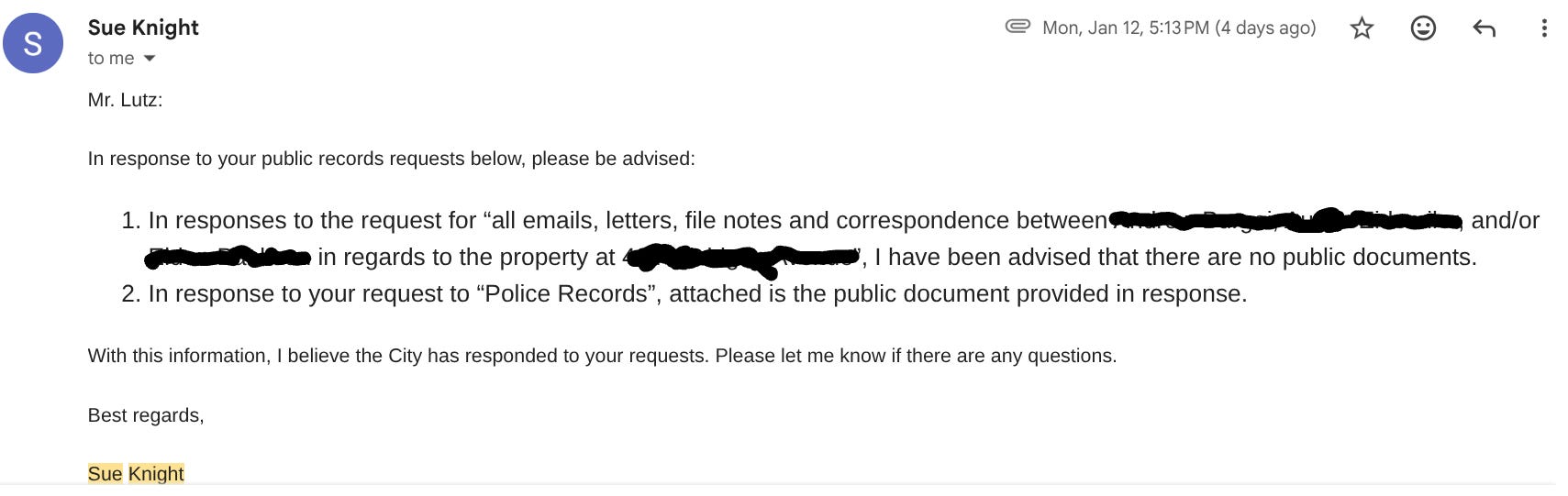
The response was largely disappointing. The only bright spot was the police report. The report that was received, confirmed the basic facts that were already reported. Around 4:42 p.m. on January 7th, a ninety‑year‑old man was arrested at Aldi on a warrant and taken to the Miami County jail. The report notes that his hands were handcuffed in front, not behind his back, and that he was “startled but understood after the officer explained the warrant.” The report suggests the officer treated him with dignity during the arrest.
Even so, the public records request did not answer a key question: what written communication, if any, had taken place between the man and the city offices that issued the property maintenance complaint? That is the kind of information that helps residents understand whether the system is fair.
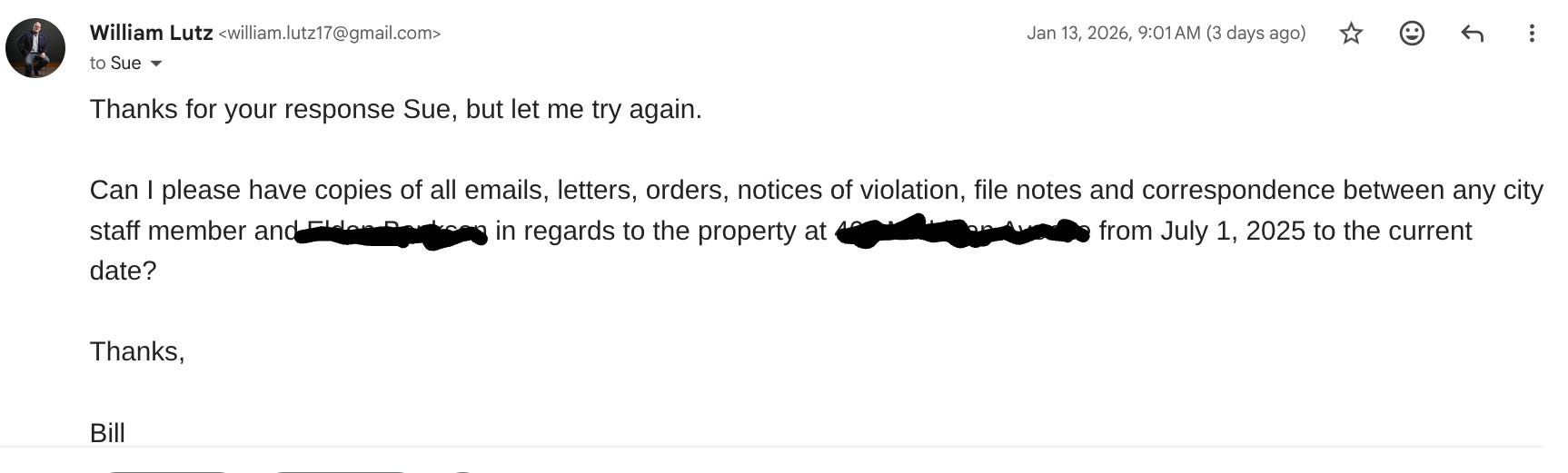
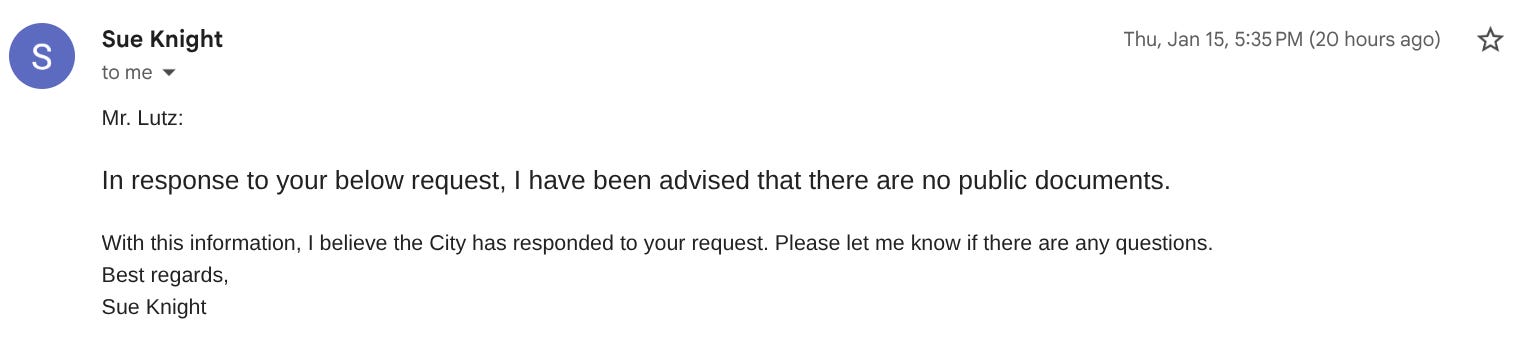
On January 13, another public records request was made. This time, the request was broader and included timeframes to make it as clear as possible what records were being sought. Again, sensitive information has been removed, but the important point is that the city’s response was basically the same as before.
Public records laws are often read very narrowly. There is not much incentive for public employees to spend hours pulling records for requests that are extremely broad or extremely detailed. The law tries to balance government accountability with the need to use staff time wisely. That balance is not easy, but in many communities, governments manage to honor both transparency and efficiency.
This does not feel like one of those times. Both of these requests were written to be clear and focused. They were not meant to waste city resources, but to help get tailored and accurate information so this story could be told accurately and fairly.
When City Hall says these records do not exist, it leaves only a few explanations, and none of them are good.
One possibility is that staff are going to court and filing property maintenance charges without any prior notice to the resident and without keeping records of inspections or communication. If true, that would be a serious problem, because there should be a record if someone looks at a property or contacts a resident.
The other possibility is that the records do exist, but the city does not want to release them, even though the law requires it. Between those two, the second possibility sadly seems more likely.
People in every community want a local government that works with them, not against them. When residents ask for public records, they expect those records to be provided in a timely and complete way. A reply that says, “There are no public records,” in a situation like this makes it seem like the city is not interested in earning or keeping the public’s trust.
Across the country, trust in public institutions is falling. Organizations that once built their mission around serving the public are increasingly seen as serving themselves. When a city refuses to provide reasonable records about how it treats a ninety‑year‑old resident, it only strengthens that belief and makes it harder to rebuild trust in the future.
Announcing our January Community Survey!
Every other month, this publication takes time to ask our readers how they feel about the happenings in their hometown! What are the challenges? What are the opportunities? Is your hometown headed in the right direction? Our survey is the easiest way for you to express your thoughts. Next month, this publication will report out on the results.
Thanks for your time and your participation! It is greatly appreciated!
A New Way to Support This Work
Our readers and subscribers have been asking for a new way to support the work being done here at Civic Capacity! Some of our readers do not like the idea of having to sign up for another subscription service. Some of our subscribers occasionally want to give more support through a one-time transaction.
Civic Capacity is partnering with “Buy Me A Coffee” to give our readers, subscribers and friends an opportunity to give one-time support to Civic Capacity. Personally, I don’t like coffee, but I will never turn down a nice iced tea. If you feel compelled to support this effort, just click the button below.
Thanks for reading today’s Civic Capacity Newsletter! Please feel free to share this information with your friends and neighbors.
Also, please consider subscribing to our work. If you are a free subscriber, please consider becoming a paid subscriber. For less than $1 a week, you can get timely and conversational updates about the decisions that are impacting you and your community!