

Downtown Property Assessments to Be Discussed
Vol. III, No. 264 - After Years of Headwinds, Downtown Property Owners Could Be Faced With Large Assessments for Downtown Improvements

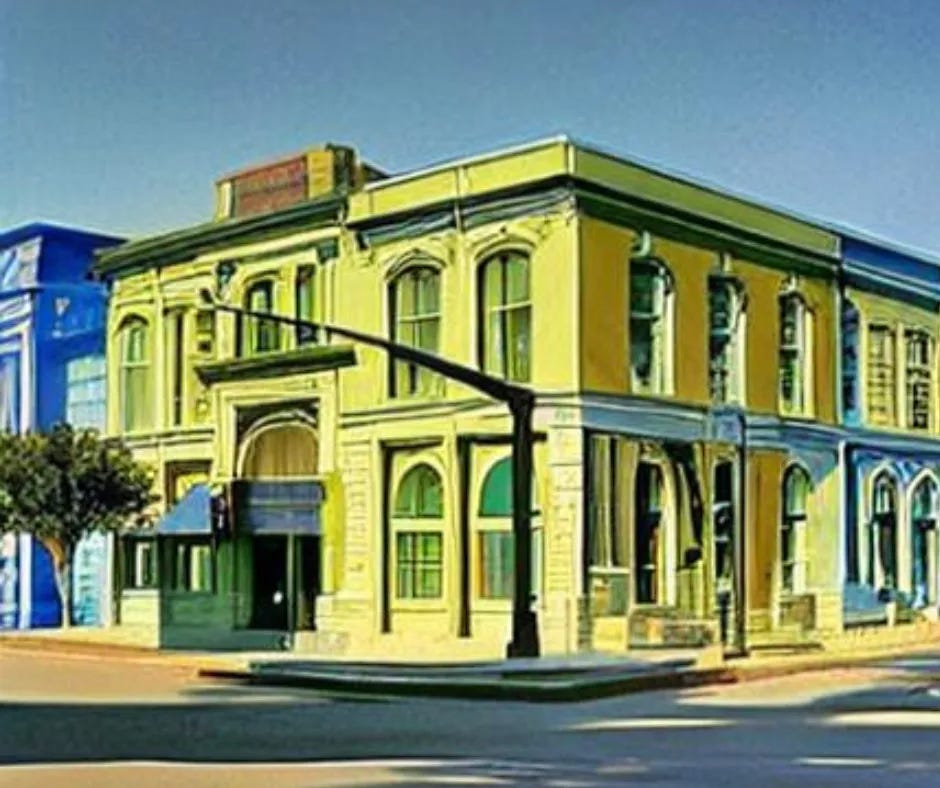
This coming Monday, Troy City Council’s Streets and Sidewalks Committee will be asked to take the first formal step toward assessing downtown property owners as part of the city’s ambitious 2026–2027 Downtown Safety and Streetscapes Replacement Project. The committee will be asked to recommend Resolution of Necessity come before the entire City Council. This resolution sets in motion a process that could result in direct charges to roughly 60 private property owners — ranging from just over $1,200 to nearly $21,000 per parcel, with four properties facing assessments exceeding $10,000.
This is worth paying close attention to, because the conversation that has unfolded behind the scenes raises legitimate questions about fairness, timing, and what kind of city Troy wants to be for the businesses at its center.
Back in July 2025, At-Large Councilwoman Susan Westfall sent city administration a detailed, thoughtful list of seventeen questions about how the assessment process would work, whether it was equitable, and what protections might exist for downtown businesses that have already endured years of hardship.
And while the committe will be asked to contemplate this Resolution of Necessity in just days, It took seven months — and multiple follow-up requests from Councilwoman Westfall in October, November, and again in February 2026 — before city staff provided a response. The delay is acknowledged in the administration’s own memo.
The responses, while thorough in some areas, largely reinforce the city’s position rather than engage with the deeper equity questions Westfall raised. For instance, when asked whether the city had conducted any economic impact assessment to measure how additional financial burdens might affect downtown business viability, staff replied that they were not aware of any such analysis and did not believe one was “feasible.” That answer may be technically defensible, but it is not particularly reassuring to a business owner staring down a five-figure bill.
The administration’s case for moving forward with the assessments rests on two pillars. First, the city has applied sidewalk assessments consistently and citywide since 1996 — across 19 phases, impacting more than 3,600 properties — and treating downtown differently would be inequitable to those who already paid. Second, staff is actually recommending a generous 64 percent discount from what the standard assessment practice would otherwise require, bringing the total downtown assessment from a potential $606,022 down to an estimated $217,223.
Both of those points deserve credit. The city has been consistent, and the proposed discount is real and meaningful. But consistency in process is not the same as wisdom in every application. The city’s own five-year General Fund forecast makes the financial stakes abundantly clear: the difference between collecting the full recommended assessment and waiving it entirely amounts to a change of less than $484,000 in a projected five-year fund balance that will still exceed $12 million even in the most conservative scenario. To put that in context, the City of Troy’s general fund grew by more than $15 million in 2024 — over $1 million per month — according to the most recently available Comprehensive Annual Financial Report. The $217,000 being sought from downtown property owners is, by any honest measure, a small amount.
There is a tendency in administrative policy to treat consistency as a virtue in itself. But consider what downtown Troy actually is. Former Mayor Mike Beamish warmly described it as “Troy’s Living Room” — and that framing captures something real. Downtown is not just another block of sidewalks. It is where our community gathers for events, where people walk rather than drive, where restaurants and shops fill the role of a shared community space. The foot traffic on or near the Public Square is simply not comparable to the sidewalk in front of a home in Westbrook, and pretending otherwise does not serve anyone well.
Downtown has also faced a compounding series of headwinds over the past several years: the West Main Street construction through Phases 1 and 2, the sudden closure of West Main Street due to the IOOF building crisis, and the lingering shadow of the pandemic. The visible increase in vacant storefronts is not anecdotal — it is a signal that downtown’s recovery is still fragile and still underway. Piling an additional $217,000 in assessments onto the property owners and businesses that have weathered all of that is a choice, not an inevitability.
Good governance is not just about applying rules uniformly. It is also about reading the room and making strategic decisions that build the kind of trust and momentum a community needs to thrive. Waiving these assessments — or at minimum deferring them — would send a clear and tangible signal that the city sees downtown as a partner in a shared project, not simply as a revenue source.
The administration’s own forecast makes clear that foregoing the $217,223 in assessments would have a negligible impact on the city’s long-term financial health. The city carries more than $83 million in its general fund and nearly $124 million in investments. The money it would collect from downtown property owners would be far better deployed by those owners in their own businesses — on improvements, marketing, staffing, and the kind of investment that actually generates vitality. That is the kind of return the city cannot put in a spreadsheet, but that our community will feel.
Council has a real opportunity on this issue. Council members can and should ask the administration to model what a full waiver would mean — not just for the city’s bottom line — but for the health and well-being of those businesses located downtown.
And then council should ask themselves whether $217,000 is truly worth the cost to downtown’s momentum and to the city’s relationship with the small business owners who make Troy’s living room worth showing up to.
And our residents have a responsibilty as well. If you feel compelled to share your thoughts and feelings on this issue, you can attend the Streets and Sidewalks Committee meeting on Monday Night beginning at 6:00 p.m. at City Hall. The Committee is chaired by Councilman Bobby Phillips, who is joined by Jeff Schilling and Kristie Marshall.
You can also send an email to your council member and the best way to do that is to send a message individually to those members. Clicking on the links below will send you to each council member’s webpage with their contact information, including email address.
William Rozell, Council President
Jeffrey Whidden, First Ward Council Representative
Kristie Marshall, Second Ward Council Representative
Madison Hickman, Third Ward Council Representative
Bobby Phillips, Fourth Ward Council Representative
William Twiss, Fifth Ward Council Representative
Jeffrey Schilling, Sixth Ward Council Representative
Todd Severt, Council Representative At-Large
Lynne Snee, Council Representative At-Large
Susan Westfall, Council Representative At-Large
A New Way to Support This Work
Our readers and subscribers have been asking for a new way to support the work being done here at Civic Capacity! Some of our readers do not like the idea of having to sign up for another subscription service. Some of our subscribers occasionally want to give more support through a one-time transaction.
Civic Capacity is partnering with “Buy Me A Coffee” to give our readers, subscribers and friends an opportunity to give one-time support to Civic Capacity. Personally, I don’t like coffee, but I will never turn down a nice iced tea. If you feel compelled to support this effort, just click the button below.
Thank you to L. Calvert for your generous support and the nice ice cold beverage!
Thanks for reading today’s Civic Capacity Newsletter! Please feel free to share this information with your friends and neighbors.
Also, please consider subscribing to our work. If you are a free subscriber, please consider becoming a paid subscriber. For less than $1 a week, you can get timely and conversational updates about the decisions that are impacting you and your community!