


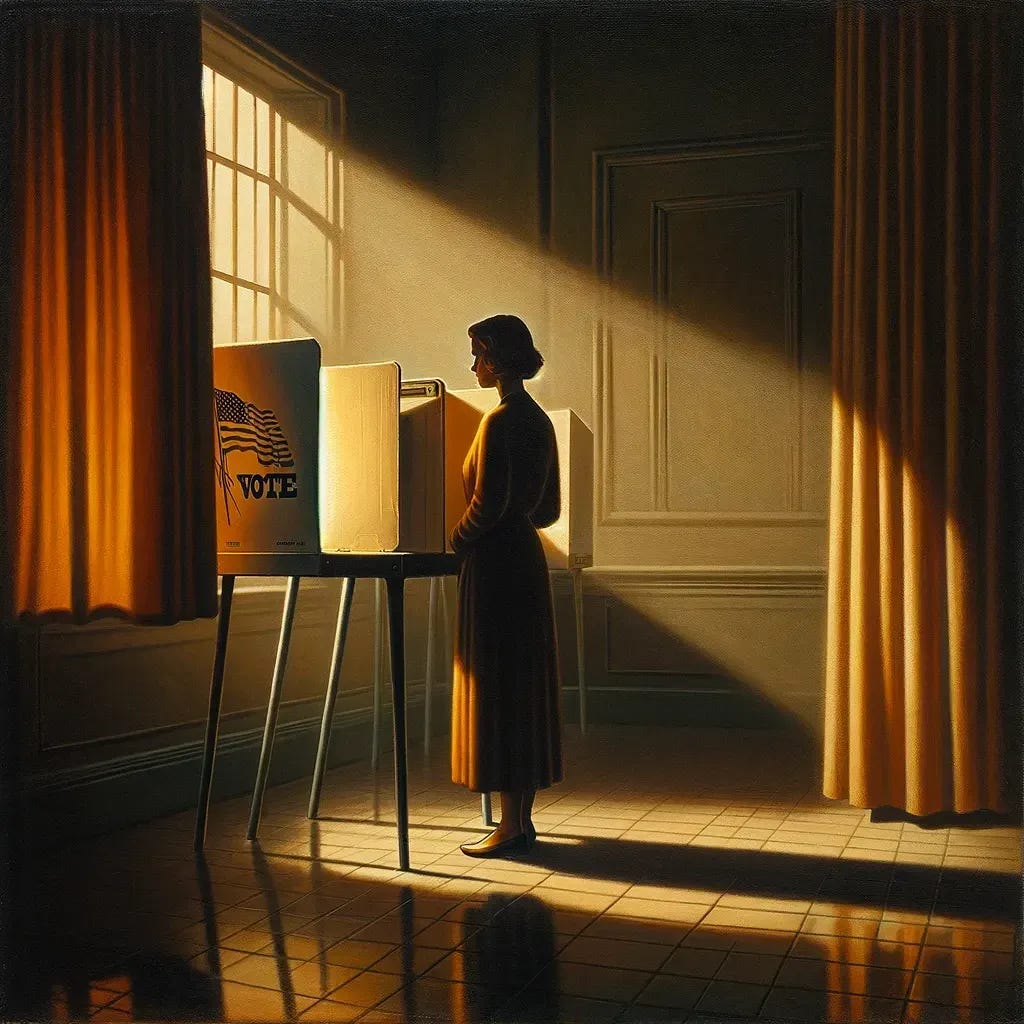
Early in-person voting in Miami County is running far ahead of any recent governor’s race. In the first three days this year, 1,711 people voted at the board of elections office in Troy. In 2022, the same three days drew 775.
The long view is striking. The first three days brought 158 voters in 2010 and 164 in 2014. Then the count jumped to 437 in 2018 and 775 in 2022. This year’s total is more than double 2022’s and nearly four times 2018’s. The first day alone drew 640 people, compared with 260 four years ago. Across Ohio, first-day in-person voting rose sharply while mail-in ballot requests fell. Some of our new in-person voters may simply be people who switched from the mailbox to the ballot box.
The daily pattern also changed. In 2022, each day was busier than the one before. This year, day one was the biggest at 640, then 580, then 491. That looks like eager voters rushing in early, and the pace may settle down.
So where do these voters live? Over a third of those early votes came from Troy, with 616. Unincorporated portions of Concord Township follows with 178 and Tipp City with 174. Piqua cast 121, Huber Heights 69, Bethel Township 55 and Covington 19. The other 479 votes came from places scattered around the county.
Size matters, though, and raw counts hide it. When we measure early votes against registered voters, the order changes. Concord Township has 4,354 registered voters, so its 178 early votes work out to about 4.1% That is the highest rate we have. Troy follows at 3.3% (616 of 18,863), then Tipp City at 2.2% (174 of 7,847) and Bethel Township at 1.6% (55 of 3,472). Piqua is last at 1.0% (121 of 12,561). Concord Township’s voters are casting early ballots at about four times Piqua’s rate.
Now to party. Ohio does not register voters by party. When we say “Republican” or “Democrat,” we mean the party primary ballot a voter last chose. “Non-party” means the voter has not picked a party ballot in a recent primary.
Among the 1,232 voters we can place, 508 are Republican and 399 are Democratic. Another 322 are non-party, and 3 are Libertarian. But those counts need context. Republicans far outnumber Democrats on the rolls, yet Democrats are voting early at a much higher rate. In Concord Township, 57 of 351 registered Democrats, about 16%, have already voted in person. In Troy, it is 216 of 1,464, about 15%. Republicans in those places are at about 7% and 6%. The same gap holds in Tipp City, Bethel Township and Piqua, where Democrats are voting early at roughly twice the Republican rate.
Non-party voters are the quiet group. They make up about 63% of Concord Township’s registered voters but only 20% of its early voters. In Bethel Township, they are 64% of the rolls and 16% of early voters. In Troy, it is 70% and 25%, in Tipp City 62% and 29%, and in Piqua 77% and 31%. We can’t tell from three days whether these non-party voters plan to vote later or sit this one out.
That brings us to the Piqua puzzle. Piqua’s early voting rate is about three times lower than Troy’s, and that holds for every group. It is true for Republicans, Democrats and non-party voters alike. A gap that even points to something affecting the whole city, not one party’s habits.
Here is one possible reason. Piqua voters have two elections on November 3. One is the general election. The other is a special election on whether to recall three sitting city commissioners. Voters who want to take part in both must cast two separate ballots on two separate voting systems. When early voting began, the recall ballot was not finished. The Board of Elections said it would post updates when it was ready for early voters. Some Piqua residents may be waiting so they can do both in one trip.
That is a theory, not a finding, and Bethel Township is a reminder to be careful. Its rate is also low, and it has no recall election. So the recall can’t be the only thing that holds down early voting. Things like distance to the Board of Elections in Troy also play a part — the closer you are to the courthouse, the more likely you are to vote early. We will know more when the recall ballot is ready and have data to see if Piqua’s numbers move. If you live in Piqua and want a mail ballot for the special election, you need to request it separately.
What should we take from all this? Three days is a small window, and a surge in early voting does not prove higher turnout overall. It may only mean people are voting earlier or in a different way. Still, the direction is clear, in person early voting is becoming a popular way to vote and each election demonstrates that more voters are using this option.
This is what it looks like when residents stay informed. If you find value in this work, share it with a neighbor, a colleague, or anyone who cares about this community. Paid subscriptions keep it going — $5 a month.
Civic Capacity runs on one thing: readers who believe local journalism matters. If you want to support this work without a subscription, you can now make a one-time contribution through Buy Me a Coffee — or in my case, Buy Me an Iced Tea. Click the button below. Every contribution goes directly into the work you read here every day.