Taking a Look at Sidney's Financial Picture
Vol. III, No. 207 - Our first look at our northern neighbor
As this publication looks toward the future, one idea that has been kicked around is to slowly push our boundaries a little farther. No, that doesn’t mean changing the values or the principles of this publication, when I think about boundaries, I am thinking more physical boundaries. What would it look like if we started looking at other local communities outside of Miami County?
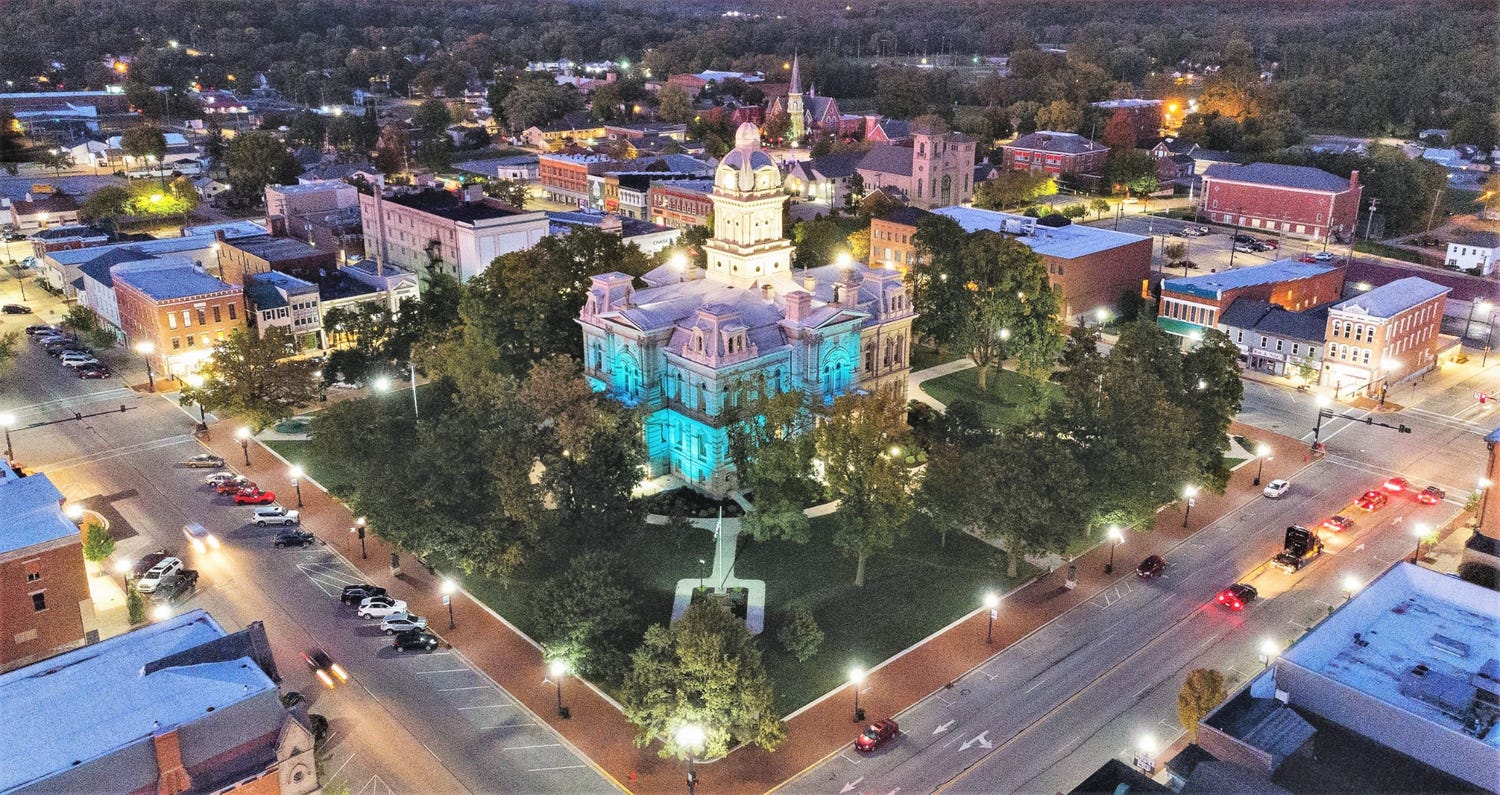
Personally, I have been spending more time in Sidney lately and find it to be a very nice community. The downtown is generally attractive and has an expansive feel, anchored by the county courthouse. Traffic flows smooth and the streets seem well maintained. Gas is even cheaper in the town. All in all, Sidney seems to be a good and growing community.
Of course, my knowledge of the community is pretty limited and one of the places any person can look at for an idea of how the community is moving ahead is looking at the community’s Comprehensive Annual Financial Report.
Sidney’s 2023 report, recently released by the Ohio Auditor of State, paints a picture of a small city that punches above its weight in jobs, investment, and long-term planning. It shows a community that brings in workers from across the region, is growing its net position, and is investing in new public facilities like a modern City Hall and fire station to support future growth.
One of the most striking stories in the report is jobs. Sidney and Shelby County gain more than five thousand workers on a typical day, because more people commute in for work than leave the county, while nearby counties such as Miami, Darke, Champaign, Logan, and Auglaize all see a net loss of workers. This daily inflow reflects Sidney’s strong industrial base and its role as a regional job center, anchored by large employers like Copeland, Cargill, NK Parts, Wilson Health, and several advanced manufacturing firms.
The report also highlights how this job engine shows up in local income tax receipts. Municipal income tax is the City’s main revenue source, and total income tax collections have remained solid, with more than 21 million dollars received in 2024 at a 1.65 percent rate, even after the temporary street levy component began to phase out. A large share of these revenues is withheld directly by employers, which ties the City’s fiscal health closely to the strength and stability of its business community.
Sidney’s overall net position continues to grow, which is an important signal of financial health. At the end of 2024, the City’s total net position reached about 170.5 million dollars, an increase of roughly 12.4 million dollars over the prior year, with gains in both governmental and business-type activities. Much of this growth reflects steady operating performance, strategic use of grants, and ongoing investment in capital assets like streets, utilities, and public facilities.
The report shows that Sidney is not just maintaining what it has, but building for the future. Capital asset activity in 2024 included progress on the new municipal building and a new fire station, along with major utility and street projects such as Campbell Road reconstruction, sanitary sewer upgrades, and water main replacement. At the same time, park and trail improvements—including a trail extension to Kuther Road funded in part by grants and American Rescue Plan dollars—are expanding quality-of-life amenities that help the city attract and retain residents.
Economic development is another clear theme. The City’s location on Interstate 75, its rail access, and a long manufacturing history underpin a diverse industrial base, with Shelby County ranking among the highest in Ohio for manufacturing jobs per person. The City uses tools such as a citywide Community Reinvestment Area, Enterprise Zone abatements, tax increment financing, and a municipal job creation tax credit to support expansions by firms like Copeland, Cargill, and new employers in the Burr Oak subdivision and Sidney Industrial Park.
Housing and downtown vitality also receive careful attention. The report notes more than 1,200 residential units in the development pipeline, including the Burr Oak subdivision, new multifamily projects, and the mixed-use Ohio Building downtown with commercial space and 50 upper-floor apartments. Public–private investment downtown has funded features like decorative arches and mid-block crossings, reinforcing a walkable core that supports new dining, entertainment, and the city’s Designated Outdoor Refreshment Area.
Finally, the report makes clear that Sidney’s leaders are trying to manage growth with discipline. City Council has adopted financial policies on reserves, debt, user charges, and budgeting that are reviewed each year, and the City continues to receive clean audit opinions and to earn recognition for excellence in financial reporting.
So, there is a good introduction to Sidney. Let me know, should we continue to cover communities like Sidney and others in the region, or just stick with Miami County? It seems especially relevelant since many people in Miami County work in Sidney but live here. Leave me your thoughts at pinnaclestrategiesltd@gmail.com


