


A personal note to our readers: As of this writing, I am out of town, but by the time this goes, out I will be back in town. I am in Indianapolis taking a class on planned giving for my work at New Path. Regardless, my heads has been buried in things like wills and trusts, charitable gift annuities and a whole other bunch of acronyms that don’t really matter here.
So, in all fairness, I am mailing today’s newsletter in by running a repeat newsletter that came out last September dealing with some of the issues of Piqua. It was a very popular read and I think it’s worth reviewing again.
Our readers can decide for themselves if the fundamental issues brought forward still remain alive and well today.
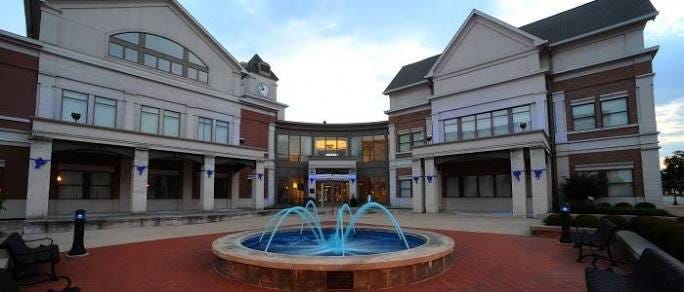
From September 24, 2025:
Accountability cannot exist without true access, but in Piqua, open governance is quietly being led to the slaughter. The ideal—decision-making in partnership with citizens—has become a negotiation over how much control to surrender and when. With legalistic decorum as a shield, city officials increasingly treat residents not as partners, but as lambs: to be guided, corralled, and ultimately pacified.
Unfortunately, this isn’t accidental. The very right of citizens to participate in their own governance is being brought down to the barest minimum, a narrow track along which public input is paraded but never meaningfully unleashed. The lamb metaphor isn’t overdrawn. This is a city where shepherds—elected and appointed alike—regard their flock as docile, unthinking, moved from meeting to meeting as needed, only to be prized when harvest comes in the form of a vote. When the polls close, so too do the gates—until the next shearing.
It is hardly surprising, then, that most would struggle to name their council member. Engagement has become ritual, not reality. Bureaucrats, for their part, seldom see residents as assets to be valued. More often, they are inconvenient raises of woolly voices, best managed from a safe distance.
This trajectory found its sharpest expression at the last Piqua City Commission meeting. The agenda promised for modernization of boards and commissions, but the proceedings revealed a blueprint for enforcing silence and centralizing power. Dissent became something to be managed, not engaged, and the discomfort among officials was visible each time civic engagement threatened to stray from the script.
Residents, naturally, have begun to notice the fencing. Concerns are met with polite deflections, their voices folded and put away. One resident articulated the frustration well: “Citizens are not really given public comment time…they are not allowed to speak…on very important issues to the community.” Her words, blending lament with indictment, made clear that a system so closed inevitably breeds not just disagreement but exasperation. Yet the commission recoiled at the faintest whiff of passionate objection. One City Commissioner seized on an unfortunate metaphor (“violent disagreement”) and transformed it into a pretext for admonishing residents, making a show of order and warning critics back into the fold.
This pattern is no accident. Legislative proposals—like Ordinance No. O-11-25—are packaged as administrative “consistency” but amount to nothing more than collecting authority into fewer hands and shrinking independent thought. The goal is not to build better boards, but to draw the fence ever tighter, so only the most domesticated voices remain.
City staff have been candid about the new reality, particularly for the revamped Energy and Utility Board. Public comment, they argue, is too risky. If it must be tolerated, it is to be carefully timed and always kept off the official record. Here, transparency is something to be cut, not cultivated.
The City Manager dropped any pretense about why: the changes serve not public inclusion, but legal anxiety. The push for “uniform ways” to police public comment is modern risk management. In Piqua, openness is no longer a value, but a liability.
The commission’s procedural rules reinforce this: public comment on non-agenda items is grudging, granted only at their “discretion,” and always at the session’s exhausted end. Speak up after 9 p.m. and the gates simply close. Those left outside are put off to another day, their urgency faded by the delay. Even the echoes of collective passion—clapping, cheering—are proscribed. A city that cannot tolerate the mild disorder of the residents is one afraid of its own citizenry.
This is not the result of bureaucratic awkwardness or miscommunication. It is the steady triumph of order over voice, risk management over participation. The stock explanations such as legal peril and administrative ease, mask a deeper truth. In the relentless drive to control the citizenry, the city risks becoming a shepherd with no one left to lead. Trust frays not in dramatic acts, but in the slow removal of agency: residents recast as mere liabilities, community spirit processed and portioned.
Were Piqua a private business, it would have shuttered long ago from neglect. But government, existing without competition, is insulated from desertion. That does not excuse its failures. The cost of this retreat is profound: a city where public meetings are not forums for debate, but pageants for the record; a government whose relevance is ensured only by the absence of alternatives.
Piqua’s people deserve better. This publication believes that civic capacity is not a matter of herding lambs, but of cultivating partners. The discomfort that officials feel when residents raise real, sometimes strident, voices is not a bug—in any healthy community, it is the feature. Honest participation is never meek, never automatic. It is difficult, necessary work: the only safeguard against a city that loses not just the habit, but the possibility of trust.
In the end, what is sacrificed at the altar of risk-aversion is not simply noise, but the energy, the wisdom, the future of the community. Silence may be orderly, but it breeds nothing worth having.
This is what it looks like when residents stay informed. If you find value in this work, share it with a neighbor, a colleague, or anyone who cares about this community. Paid subscriptions keep it going — $5 a month.
Civic Capacity runs on one thing: readers who believe local journalism matters. If you want to support this work without a subscription, you can now make a one-time contribution through Buy Me a Coffee — or in my case, Buy Me an Iced Tea. Click the button below. Every contribution goes directly into the work you read here every day.