

The Future of Troy's Park and Recreation System Takes Center Stage
Vol. III, No, 185 - Consultants present guidance for the city's park system

Your message can be here!
Are you interested in becoming a sponsor of Civic Capacity? This publication has grown substantially with a subscriber roll of nearly 2,500 indidividuals receiving this newsletter daily. If you are interested in partnering to get your word about your civic minded business, please email pinnaclestrategiesltd@gmail.com.
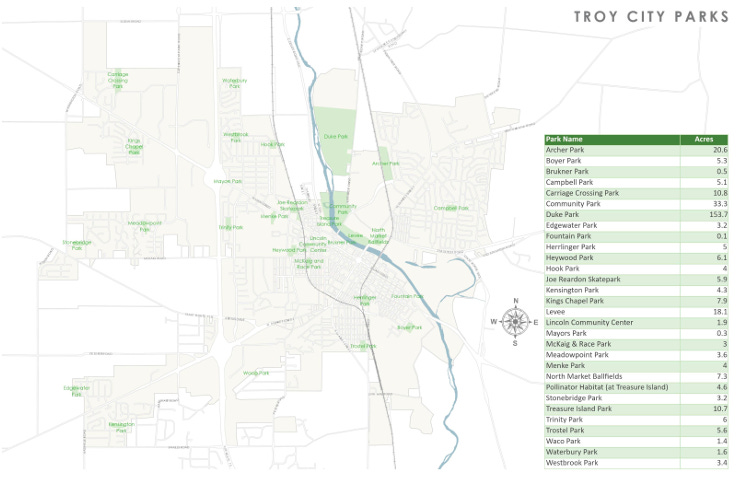
On Wednesay night at Hobart Arena, there was a rare joint work session on the a Comprehensive Parks and Recreation Master Plan that is being developed. The presentation with the city’s Board of Park Commissioners, Recreation Board and City Council gave residents a deeper look at how the city’s parks are being studied and how that work will guide decisions in the coming years. The presentation from American Structurepoint and Legacy Sports Group outlined why the city launched this process, what the consultants have learned so far, and how early recommendations are beginning to take shape.
The draft plan is now out for public review and will continue to be a focus of local discussion as it moves toward adoption. You can find the plan here:
The consultants described the master plan as a roadmap for Troy’s park system, meant to help the community decide how to care for existing parks and where to invest next. The plan looks at everything from playgrounds, ballfields, courts, trails, and pools to programs like youth sports, fitness classes, festivals, and events at Hobart Arena and Treasure Island. It is also designed to line up with state guidance from the Ohio Department of Natural Resources and the Statewide Comprehensive Outdoor Recreation Plan, which stress equity and access, trail connectivity, health and wellness, sustainable investment, and strong local partnerships.
To build this roadmap, the consultants began with a detailed inventory of Troy’s parks and facilities and paired that with extensive public input. Residents engaged through an online survey with 882 responses, in-house monthly surveys, and conversations at events like the Troy Strawberry Festival, along with advisory committee meetings and interviews with key user groups such as youth baseball and softball, football and cheerleading, pickleball, aquatics, the senior center, the Joe Reardon Skate Park, and the Lincoln Community Center. This broad outreach was meant to capture how people actually use the system, what they value, and where they see gaps or barriers.
The feedback painted a consistent picture of Troy’s strengths and challenges. Residents praised the variety and number of parks, strong maintenance in many locations, and the sense that parks add real family and community value. At the same time, many pointed to outdated or unsafe features, a lack of water fountains, restrooms, seating, and shade in some parks, the absence of a public splash pad outside the aquatic facility, and concerns about fair access to fields and crowded conditions at popular sites.
Accessibility and inclusion emerged as major themes in both the surveys and the ADA assessment. About 15 percent of households reported concerns about accessibility, and many respondents called for smoother sidewalks and paths, ADA-compliant restrooms, more ramps and accessible routes, and inclusive playground equipment that welcomes children and caregivers of all abilities.
At the Troy Strawberry Festival outreach effort from the consultant, residents highlighted needs such as accessible restroom facilities, improved seating that makes space for wheelchair users at picnic tables, and accessible water fountains. The consultants noted that addressing these issues is not only a legal obligation but also a key part of making parks truly welcoming to everyone.
On the numbers side, the needs assessment compared Troy’s facilities to national benchmarks from the National Recreation and Park Association. The analysis shows that Troy has more playgrounds, diamond and rectangular fields, and neighborhood parks than typical communities of similar size, as well as more trail mileage than both the population-based standard and the national average. However, the city operates its system with fewer full-time staff and lower operating expenditures per acre than median levels for comparable agencies, which puts pressure on maintenance and service delivery as use grows.
The consultants also looked closely at how often residents use the system and what they want more of. More than half of survey respondents had visited a park in the last week, and over half reported taking part in sports, classes, events, or festivals hosted at Troy parks, with baseball and softball, soccer, swimming, and pickleball among the most popular activities. Treasure Island concerts, the Troy Strawberry Festival and summer camps ranked highly as events that draw families into the system. Many residents said they learn about park programs through email and social media, which will help guide future communication efforts.
Early recommendations from the consultants focus on making the most of what Troy already has. Systemwide, the draft plan emphasizes upgrading and modernizing existing parks rather than building many new ones, with priorities around ADA accessibility, better circulation and connectivity, and planned replacement of aging playgrounds and other equipment. A proposed five-year maintenance plan would add a dedicated budget line for ADA improvements, recognizing that accessibility upgrades need consistent investment rather than one-time fixes.
Another emerging idea is to look at how underused parks in overlapping service areas might be repurposed or reused. Some park, such as Boyer, Edgewater, Heywood, Waterbury, and Stonebridge are being studied to see whether their roles should change to better match community needs. At the same time, the consultants suggest that new residential developments located outside current neighborhood park service areas should be required to include HOA-owned parks that are open to all Troy residents, not just nearby homeowners, to keep the system equitable and connected.
Several individual facilities are receiving special attention because of their citywide importance and the level of demand they face. Duke Park, in particular, sits at the center of youth baseball, softball, soccer, and football in Troy, and the consultants outlined three options that range from a full redesign with additional diamonds and rectangular fields to more targeted improvements like relocating existing diamonds or adding synthetic turf infields. All options include more parking, new restrooms, better storage, and improved lighting, along with a proposed operational model that would clarify roles among leagues, the city, and potential management partners.
Other key sites include the Troy Aquatic Park, where survey respondents prioritized more seating, improved and expanded restrooms, a larger youth water play area, and an expanded concession stand, with a combined package of improvements estimated at just over six million dollars. The Joe Reardon Skate Park is being studied for a potential full reconstruction with amenities like a pump track, plus new lighting, furnishings, and a restroom building, while the Troy Senior Citizens Center has identified needs ranging from a screened porch and transportation support to technology assistance and building repairs. Costs have been outlined for some of these items to help the city phase investments over time.
Finally, the consultants shared a menu of potential funding sources that could help Troy stretch local dollars. These include state and federal programs for playgrounds, trails and accessibility upgrades as well as foundation grants that support inclusion, shade structures, small courts, and equipment. The next steps in the process include final steering committee meetings, ongoing discussions with the park and recreation boards, public presentations, and then final editing and adoption of the plan.
Overall, the plan was well received by those in attendance. The members of the public that spoke on the presentation gave a sense of strong enthusiasm for what was presented and a strong desire to move ahead; there have been numberous attempts over the past decade to make some signficant improvements to the city’s parks and recreation system and none have come to full flower.
What this week’s meeting represented are some of the first concrete steps in bringing the public along the planning process. There are still multiple discussions and decisions that need to be made. At this point, the public is well advised to learn about what was discussed and stay aware when critical discussions are taking place.
A New Handbook to grow Civic Capacity!
Recently, we created a new digital handbook, “The Citizen’s Guide to Public Records”. This handbook is designed to help residents have a better understanding of public meetings and meeting records. It’s filled with templates, ideas and other information that will open a new world of public affairs.
Also, if you have ideas for future handbooks, please let us know at pinnaclestrategiesltd@gmail.com.
Want to Learn More About Troy’s Businesses?
Our publication has recently released our September 2025 Economic Abstract, the most comprehensive and up-to-date report on the businesses and industries in the City of Troy. For those that want to understand our community’s business and industries, this is a must-have report.
Thank you to our New Media Partners!
Recently, many of our stories has been showing up on the local news website, www.mymiamicounty.com. We are grateful for the good folks for sharing our work with their audience and we would encourage our readers to check them out at their website!
Our publication would also like to recognize the good work being done at www.piquanewsnow.com. Piqua News Now is a new web-based news and information site for the Miami County area, with a specific focus on Piqua!
In addition, the good folks at Piqua News Now have started a new, 24-hour streaming YouTube channel. This channel is awesome with continuous weather updates and more importanly, it provides a 24-hour audio feed from county wide dispatch. Check it out here!
You Can Help Support This Work!
Our readers and subscribers have been asking for a new way to support the work being done here at Civic Capacity! Some of our readers do not like the idea of having to sign up for another subscription service. Some of our subscribers occasionally want to give more support through a one-time transaction.
Civic Capacity is partnering with “Buy Me A Coffee” to give our readers, subscribers and friends an opportunity to give one-time support to Civic Capacity. Personally, I don’t like coffee, but I will never turn down a nice iced tea. If you feel compelled to support this effort, just click the button below. In other words, this is an online tip jar.
Also, thanks for reading today’s Civic Capacity Newsletter! Please feel free to share this information with your friends and neighbors.
Also, please consider subscribing to our work. If you are a free subscriber, please consider becoming a paid subscriber. For less than $1 a week, you can get timely and conversational updates about the decisions that are impacting you and your community!