


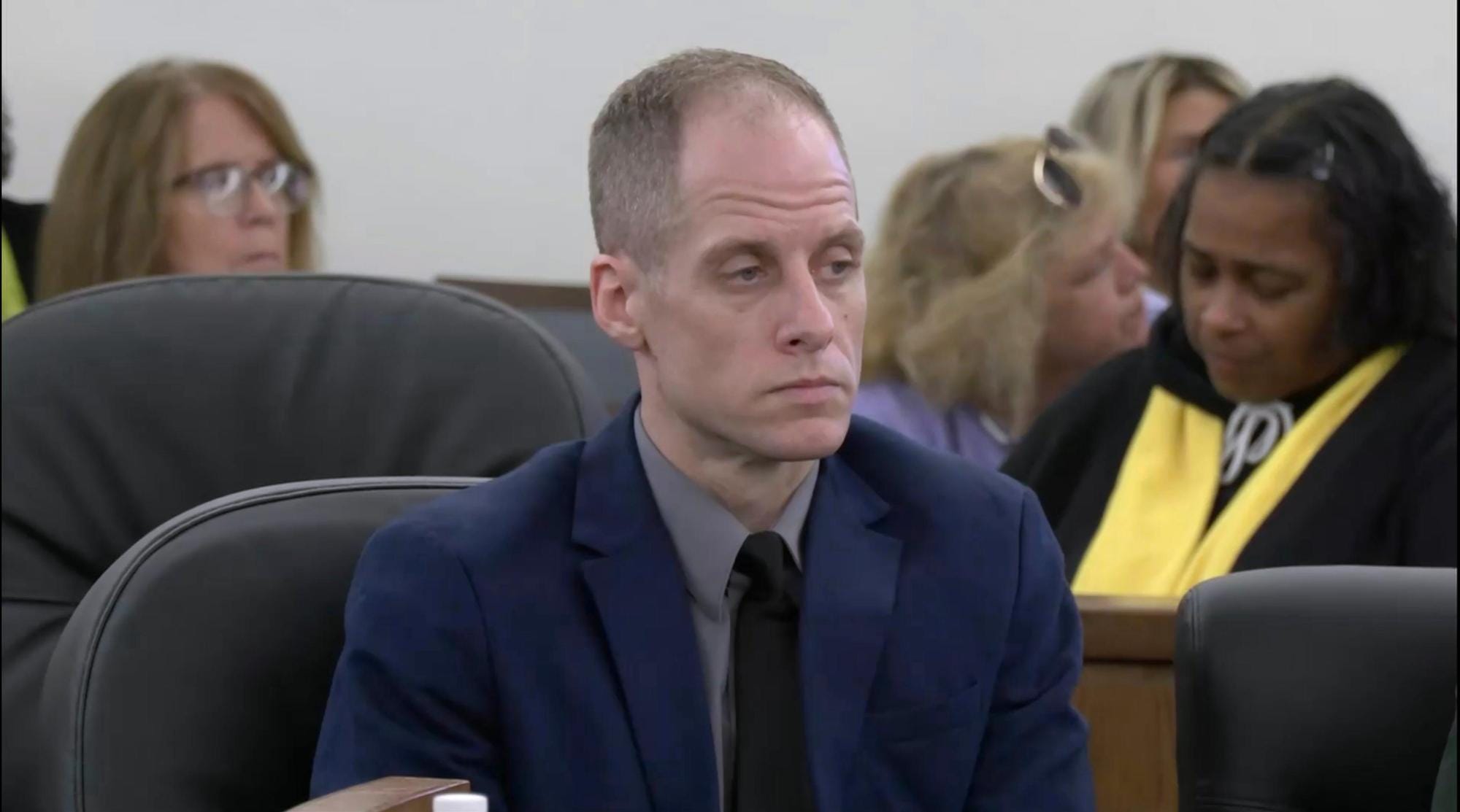
Yesterday, Caleb Flynn was found guilty of all counts against brought against him.
The trial has brought a great deal of national (even international) attention to Miami County. In a more personal sense, it has also brought me to a decision about what this publication should, and more importantly should not say.
I have not written about the case until now. That is not because I have nothing to say. It is because I know, or know of, some of the people connected to it. I have sat in a church where some of them worship. I have seen people in this story walking down my street. I have volunteered with some of their family. I know many of these people by name.
That kind of closeness changes how you hear a name on the news. A person is no longer just the role assigned to them in a story: defendant, witness, litigator. You may remember where you saw them last, or find yourself thinking about someone who knows them. None of that makes it easier to think about all of the events of this trial. It does make it harder to pretend I am a detached observer.
Other reporters have been covering the testimony and the arguments. Readers who want to follow the case should turn to that reporting, they are much better to provide insights about this case than I am. I have kept my thoughts about it largely to myself because I do not believe my thoughts would help anyone understand what happened. Still, saying nothing at all has begun to feel strange, almost uncomfortable. This publication is about life in Miami County, and at this time, much of the country’s attention has been fixed on us. Here. In Miami County.
So I want to write about the part of the story I do know and hasn’t been talked about enough: The Place.
Ashley Flynn was killed on February 16 in Tipp City. The trial regarding her husband, Caleb Fylnn was in Troy. The verdict has rendered the verdict on the testimony and the exhibits brought forward. Those facts obviously mattered. So does the fact that, for many readers here, Tipp City and Troy are not places on a map. They are where we buy groceries, have date nights, take our children to school, go to church and run into people we know.
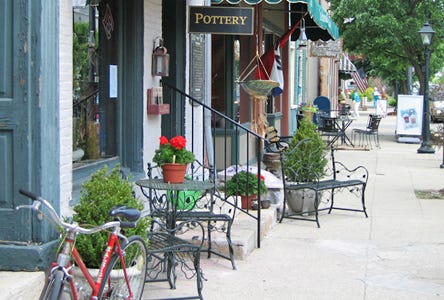
Tipp City is easy to like. Downtown, the shops and restaurants give people a reason to park the car and walk. There are sidewalks wide enough with shade trees to make the town feel natural. Beyond downtown are quiet neighborhoods and homes where daily life usually draws little notice from anyone outside. None of this makes Tipp City perfect. It does make it familiar, and for many of us, dear.
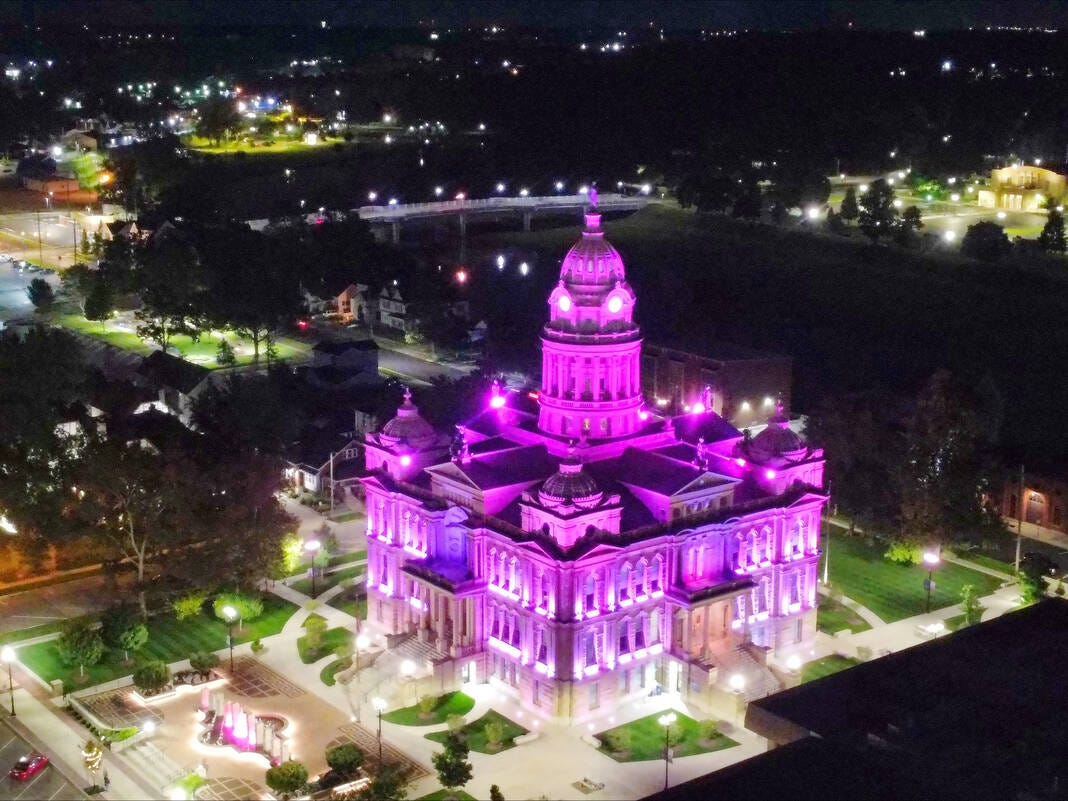
The trial is taking place in the Miami County Safety Building in Troy. Close by stands the old courthouse, one of the county’s most striking public buildings. I have seen out-of-town reporters share pictures of it. I’m glad they have. If people are going to know our county through this story, I hope they also see a little of the care generations of residents have put into the place.
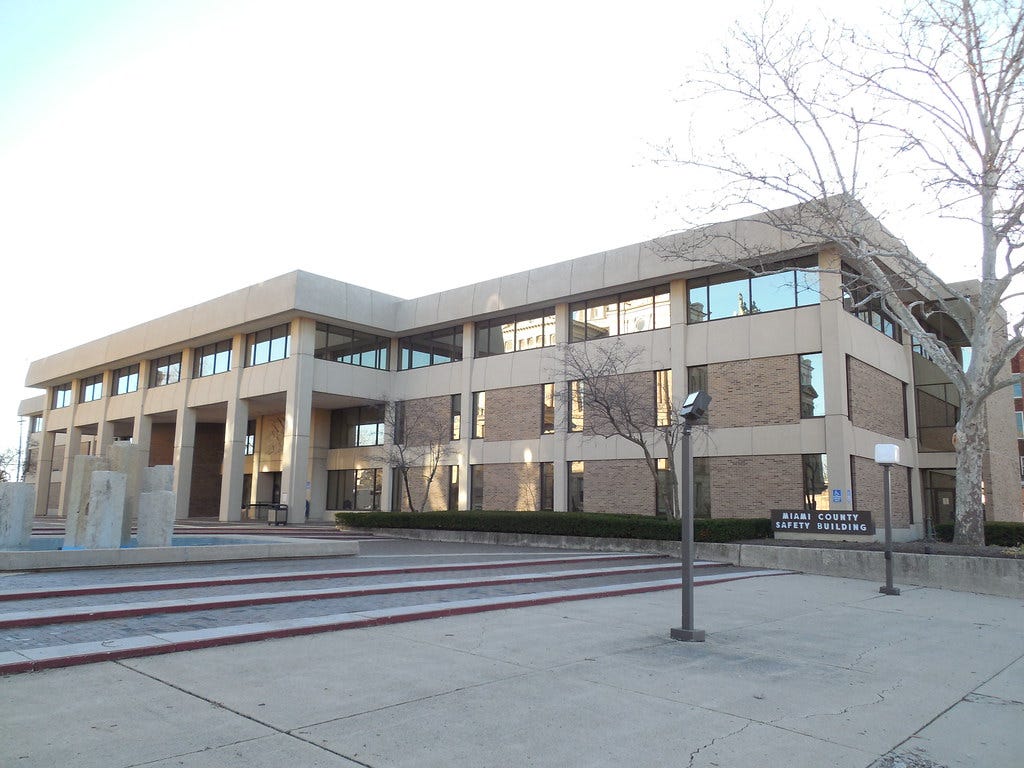
The Safety Building offers a different view of public life. It is plain and practical almost utilitarian, a specimen of 1970s government architecture. The offices feel small, even the courtrooms can only generously be described as cozy. Step outside, though, and you are back in downtown Troy. The courthouse is there. So is the downtown Public Square, with its fountain and flag. On another day, a visitor might have come simply to walk around and have lunch.
That is the strange part of seeing a place you know through a national camera. The camera frames what is happening now. It cannot show all the ordinary mornings that came before it, or the people who will still be here after it leaves. It cannot tell a viewer why one street corner brings back a memory, or why seeing a familiar building behind a reporter makes the news feel closer rather than farther away.
I have found myself watching the coverage with that feeling. I recognize the buildings. I can picture the walk from one doorway to another. Then I remember why the cameras are here.
There is a temptation to say that something like this should not happen in a place like Tipp City. I get that feeling, but it is not quite right. A beautiful town cannot promise that terrible things will never happen there. Nor should we describe its beauty as if it deepens the loss for the people closest to Ashley Flynn. Their grief does not need scenery to give it weight or some sense of meaning that isn’t meant to be there.
What troubles me is the gap between what a place looks like and what its people may be living through. From the sidewalk, life can appear steady and peaceful. Behind the doors we pass every day are lives we know only in part. We can care about our neighbors and still not know what they face.
That is not a lesson about this case, and it is not a verdict. The jury has done it’s work.
I wanted, instead today, to take a step back and mark what it feels like to be here while others look in. Miami County is more than the setting for a trial and the people here are more than non-player characters. It is home to the people who live here, including the people that are mourning, and to those who will carry on with grief and pain when the cameras are long gone.
Thank you for reading.
Announcing our September Community Survey!
Every other month, this publication takes time to ask our readers how they feel about the happenings in their hometown! What are the challenges? What are the opportunities? Is your hometown headed in the right direction? Our survey is the easiest way for you to express your thoughts. Next month, this publication will report out on the results.
Thanks for your time and your participation! It is greatly appreciated!
This is what it looks like when residents stay informed. If you find value in this work, share it with a neighbor, a colleague, or anyone who cares about this community. Paid subscriptions keep it going — $5 a month.
Civic Capacity runs on one thing: readers who believe local journalism matters. If you want to support this work without a subscription, you can now make a one-time contribution through Buy Me a Coffee — or in my case, Buy Me an Iced Tea. Click the button below. Every contribution goes directly into the work you read here every day.