What is RAPCA?
Vol. IV, No. 56 - Who is measuring our Air Quality here in the Miami Valley?

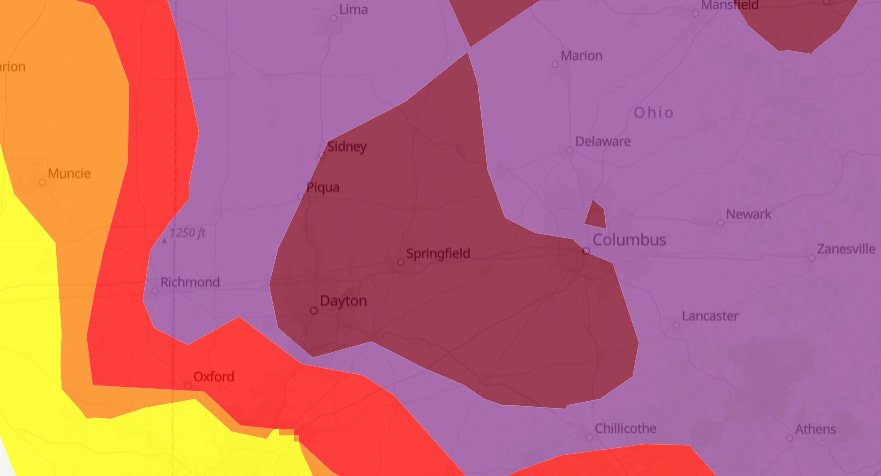
Over the last few days, Ohioans have had to deal with something unpleasant from our northern neighbors. It has caused amusement parks and outdoor activiites to close and posed a real threat to the health of many people. Thick, dense smoke from Canadian wildfires has drifted into Ohio, pushing air quality into unhealthy territory across the state and prompting air quality alerts from the Ohio EPA today. From Cleveland to Akron to Toledo, hazy skies have dropped visibility, made eyes water and give the outdoors a distinct burning smell. This isn’t a local wildfire risk story — it’s a reminder that air quality problems don’t respect borders, and that the agency tasked with protecting our lungs here in the Miami Valley has a job to do regardless of where the smoke originates.
That agency is the Regional Air Pollution Control Agency, better known as RAPCA. Unlike the drought-driven outdoor burning concerns this publication has covered before, today’s issue isn’t about fires starting here in Miami County. It’s about fine particulate matter traveling hundreds of miles and settling into the air residents breathe every day. The distinction matters, but the responsibility for keeping residents informed stays the same.
What RAPCA Actually Does
RAPCA serves as the primary air pollution control authority for the Metropolitan Dayton Intrastate Air Quality Control Region, a six-county area covering Clark, Darke, Greene, Miami, Montgomery, and Preble counties. Headquartered in Dayton, RAPCA operates as a bureau within the Division of Environmental Health of Public Health - Dayton & Montgomery County, and it works under authority delegated by the Ohio EPA in coordination with the federal EPA.
The agency’s core job is straightforward: monitor the air, enforce pollution regulations on industrial and commercial sources, and communicate clearly with the public when conditions turn dangerous. RAPCA maintains a network of monitors across its six-county region that continuously measure pollutant levels, and that data feeds into the U.S. EPA’s Air Quality System, a public database used by researchers, policymakers, and residents alike.
Two Pollutants, One Agency
Here’s what many residents don’t realize: RAPCA doesn’t just subjectively label the air “good” or “bad”. There is a real methodology and continuing monitoring of the air to ensure people are aware of outside conditions. At it’s heart, the agency measures two distinct categories of pollution, and understanding the difference helps explain why today’s smoke event looks and feels different from a typical summer air quality warning.
Particulate matter (PM2.5): Tiny airborne particles from smoke, combustion, and dust, small enough to lodge deep in the lungs. This is the pollutant driving our latest wildfire smoke alerts, and it can spike suddenly when smoke rolls in from hundreds of miles away
Ozone: A gas formed when vehicle and industrial emissions react with sunlight and heat. Ozone pollution is typically a sunny, hot-weather problem tied to traffic and local emissions, building gradually over the course of a day rather than arriving all at once
Both pollutants get reported through the same daily Air Quality Index, but they behave differently and call for different kinds of vigilance. Ozone tends to worsen through a hot afternoon and improve overnight; particulate matter from wildfire smoke can arrive suddenly, blanket a region for days, and dissipate only when weather patterns shift the smoke elsewhere. Today’s alert is a particulate matter event, not an ozone event, which is why the sky itself looks hazy rather than just feeling stagnant.
Why the Distinction Matters for You
Knowing which pollutant is driving an alert isn’t just trivia. Health guidance can differ depending on the source: particulate matter from smoke is especially dangerous for people with asthma, COPD, heart conditions, and for children and older adults, and masks that filter fine particles can help in ways that don’t apply to ozone exposure. Ozone alerts, by contrast, are more about timing outdoor activity to avoid peak afternoon hours.
RAPCA’s job during an event like this is to translate national and state-level alerts into something specific and actionable for our six counties, not just to repeat the statewide alert coming out of Columbus.
Residents in Miami County deserve to know whether local monitors are showing worse or better conditions than the regional average, and whether outdoor youth sports, senior center activities, or outdoor workers in Troy, Piqua, and elsewhere in the county should adjust their plans. That kind of local specificity is exactly what an agency with a dedicated monitoring network and public communication mandate should be providing — and it’s something that RAPCA has done well.
Announcing our July Community Survey!
Every other month, this publication takes time to ask our readers how they feel about the happenings in their hometown! What are the challenges? What are the opportunities? Is your hometown headed in the right direction? Our survey is the easiest way for you to express your thoughts. Next month, this publication will report out on the results.
Thanks for your time and your participation! It is greatly appreciated!
This is what it looks like when residents stay informed. If you find value in this work, share it with a neighbor, a colleague, or anyone who cares about this community. Paid subscriptions keep it going — $5 a month.
Civic Capacity runs on one thing: readers who believe local journalism matters. If you want to support this work without a subscription, you can now make a one-time contribution through Buy Me a Coffee — or in my case, Buy Me an Iced Tea. Click the button below. Every contribution goes directly into the work you read here every day.