


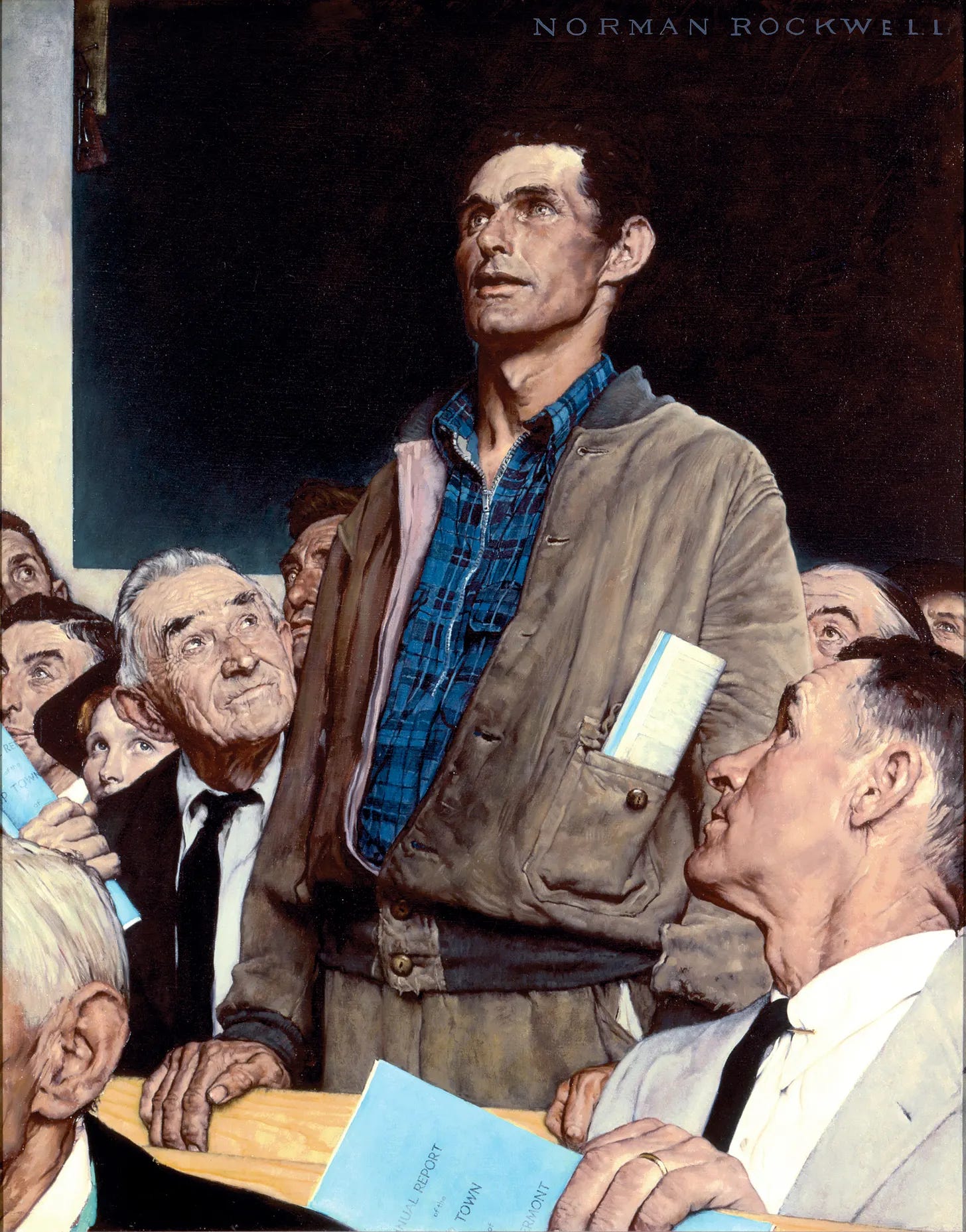
One of my favorite paintings is Norman Rockwell’s Freedom of Speech. A man stands up at a town meeting in Vermont and speaks against a plan to build a new school.
Look closely at him. He’s younger than most of the people around him. His clothes say blue-collar, while many of the men near him wear jackets and ties. If you passed him on the street, you might not look twice. Yet the room is listening. The man in front of him has turned around, hanging on every word. The room is packed, and you can tell the topic matters.
To me, that’s how local government is supposed to work. People from all walks of life stand up and share their thoughts with the folks who were trusted to decide.
That’s what a public hearing is for. Most cities require one before certain decisions, and rezoning is the classic example. Nearby property owners often get a letter. The city posts a notice and runs an ad. All of it is meant to make sure people know and have a chance to speak.
A hearing is not a debate, and it isn’t a back-and-forth. Council members mostly listen. The questions raised are usually passed to staff to answer before a final vote. At its heart, a public hearing is simple. It is the time set aside for you to be heard by the people who will decide.
The best hearings I’ve sat through weren’t about winning. People came to the podium and talked plainly about taxes, traffic and housing. They explained how a decision would touch their street, their family and their neighbors. Those are the real issues of a growing community, and they show up in people’s own words. Folks on opposite sides of the question can still be honest and respectful. When that happens, it’s democracy at work.
We shouldn’t skip over the hard part, though. A public hearing asks people to speak in public, and that scares most of us. Many would rather do almost anything else. Council chambers don’t help. You stand at a podium and look up at a row of officials. It doesn’t feel like a place for your best thoughts. So when a neighbor steps up anyway, give them credit. They don’t have to be polished. They just have to be honest.
If you ever want to speak, a few simple habits help. Read the agenda or notice ahead of time so you know the topic. Pick one to three points, because short and clear beats long and scattered. Tell the council how the decision affects you, since your story carries weight. Jot down a page of notes to keep you steady. Be kind, because you can disagree without raising your voice. If you can’t attend, ask whether written comments are accepted. You don’t need to be an expert. You just need to live there.
Better informed residents make for better decisions. That’s why this newsletter exists. Council can only weigh what it hears, and a room full of voices, like Rockwell’s, gives it more to work with. The next time a hearing comes up in your town, consider going. Even if you don’t speak, your presence tells leaders that people are paying attention.
This is what it looks like when residents stay informed. If you find value in this work, share it with a neighbor, a colleague, or anyone who cares about this community. Paid subscriptions keep it going — $5 a month.
Civic Capacity runs on one thing: readers who believe local journalism matters. If you want to support this work without a subscription, you can now make a one-time contribution through Buy Me a Coffee — or in my case, Buy Me an Iced Tea. Click the button below. Every contribution goes directly into the work you read here every day.