

Will Piqua Crack the Door to AES?
Vol. IV. No. 80 - A Public Hearing Focuses on a Franchise Ordinance

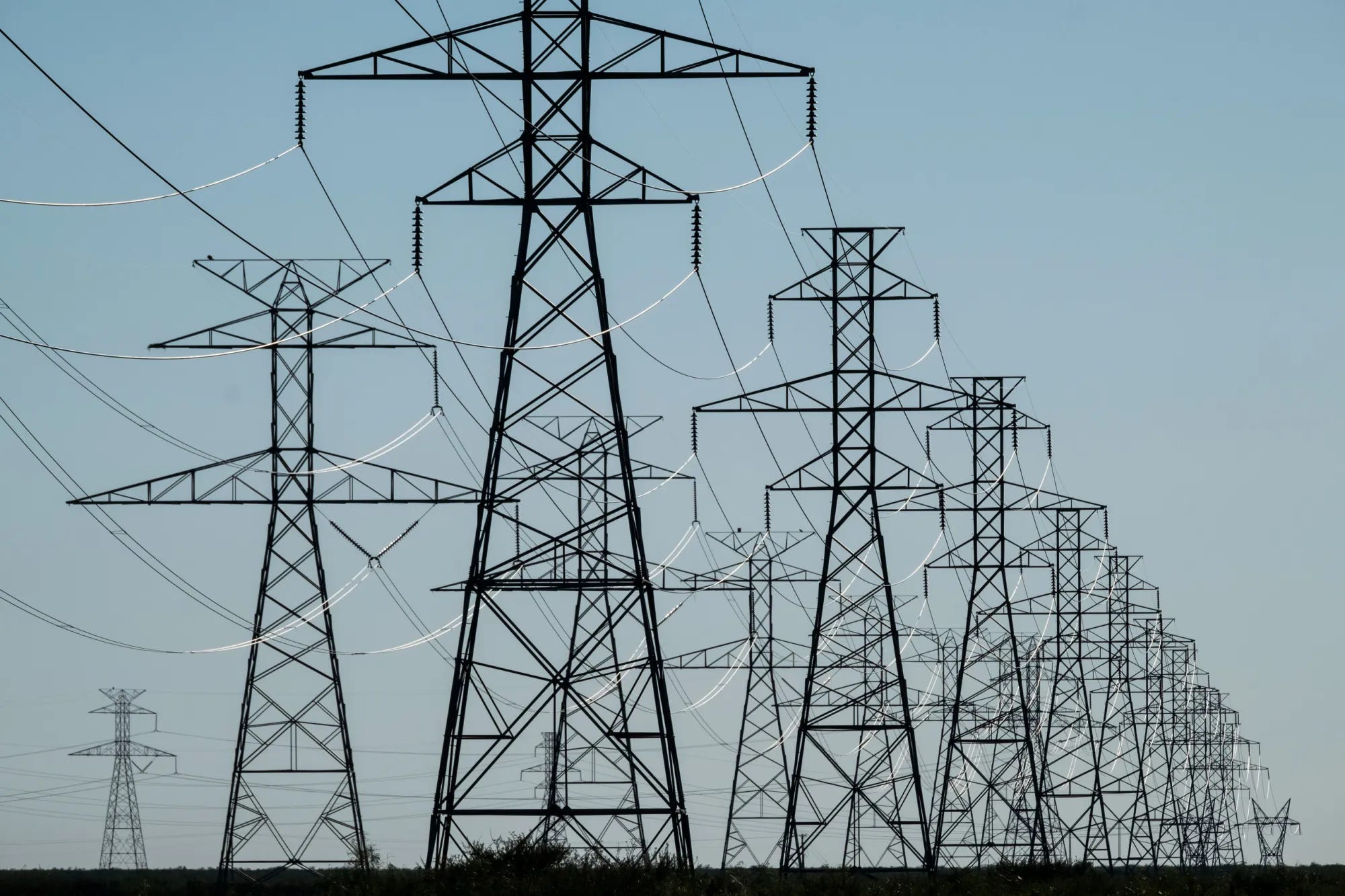
This past Tuesday, the Piqua City Commission held a public hearing on Ordinance O-7-26, which would grant a franchise to AES Ohio to provide electric service to the planned data center on the city’s southern edge. Just reading that sentence probably sounds like a big deal — and it is — but it’s worth stepping back first to talk about what a franchise actually is and why it matters.
What a Franchise Actually Does
Local governments grant franchise agreements, usually to providers of what we’d call utility services: water, wastewater, natural gas, telephone, cable television, and — in Piqua’s case — electric power. A franchise agreement adopted by a local government effectively gives one private-sector provider a monopoly to serve the entire community with that service.
There’s a reason these agreements exist. Imagine a community where, instead of one water system, you had four or five companies competing for your business. Sure, you might get a better price. But the roads would be under constant construction as each company laid its own service lines, connected new customers, and disconnected old ones. You might also end up with four or five water treatment plants instead of one. In the end, it made more sense for local governments to either provide these critical services themselves or grant a franchise to a single company to provide them.
That’s what’s up for discussion in Piqua. Ohio law allows communities to provide their own electric service and to exclude other providers from the community. For more than 100 years, Piqua’s municipal power system has served industrial, commercial, and residential customers in the city.
Why Piqua’s System Can’t Do This Alone
The data center is a different. It’s not a typical electric customer — it requires an infrastructure-intensive system built to keep the facility online 24 hours a day. When Piqua’s power system evaluated what it would take to serve the data center, it became clear they couldn’t do it.
That’s where the struggle comes in. When the only game in town can’t play, other players get invited to the table. And when those other players come in, there’s a price to pay: the franchise agreement being negotiated between the city and AES Ohio. That agreement cracks Piqua’s door open just enough to let AES serve the 600-plus acres that will house the data center — and whatever else develops in that area, now or in the future.
The Price of Admission
In exchange for opening that door, AES is proposing the city a franchise fee of $1 million a year for the life of the agreement. A number that when presented, didn’t have any background data to back it up and almost reads like it was the first figure that came out of someone’s mind. The agreement term wasn’t always 30 years, and the fee wasn’t always $1 million. The original ordinance carried a 40-year term and no franchise fee at all and the community pushed back specifically on those two points, and AES Ohio and J5 LLC — the entity developing the data center — appears to have agreed to shorten the term to 30 years and add the $1 million annual fee, along with a 60-day cure period if a payment is missed. That’s not a footnote. It’s the clearest evidence in this whole process that resident scrutiny is changing the outcome.
Learning From Troy’s Own History
Instead of getting lost in the details of the agreement itself, it’s worth looking at what history can tell us. What’s happening in Piqua isn’t too different from what happened to Troy in the 1960s and ‘70s.
Back then, many Ohio communities ran their own public utility systems, while outlying areas relied on a patchwork of rural electric cooperatives. Investor-owned utilities like Dayton Power and Light — now AES Ohio — touted cheaper electric rates, especially for industrial and commercial users, and their massive distribution and generation systems let them reliably undercut prices provided by municipal systems. This caused many cities to rethink their electric supply strategies in their communities.
In 1965, Bellefontaine sold its electric system to Dayton Power and Light, the forerunner to AES Ohio, for $5 million. Miamisburg followed with a sale of its own electric utility plant for $4.6 million. In 1971, Troy sold its power system outright for $12.5 million — which, adjusted for inflation, is roughly $100 million today.
Piqua isn’t selling its entire system. But in giving up its right to serve a 607-acre industrial development in exchange for $1 million a year over 30 years, it’s making a similar trade. Run the time value of money on that $30 million total, and the present-day value is closer to $13 million to $18 million.
Why the Process Matters
Setting the economics aside, why does the city have to go through all of this? Because the city charter requires it. Section 106 of Piqua’s charter states that no ordinance granting, amending, or renewing a franchise can be adopted until a written report with recommendations has been made to the commission by, or under the direction of, the city manager; until adequate public hearings have been held by the commission as a whole or by committee; and until at least one week has passed after the ordinance’s publication in final form.
Tuesday’s first public hearing gave residents a chance to learn more about this monumental agreement. This is a story this publication will keep covering.
This is what it looks like when residents stay informed. If you find value in this work, share it with a neighbor, a colleague, or anyone who cares about this community. Paid subscriptions keep it going — $5 a month.
Civic Capacity runs on one thing: readers who believe local journalism matters. If you want to support this work without a subscription, you can now make a one-time contribution through Buy Me a Coffee — or in my case, Buy Me an Iced Tea. Click the button below. Every contribution goes directly into the work you read here every day.